



What Is the Ratti Gali Lake Trek and Why Is It Famous?
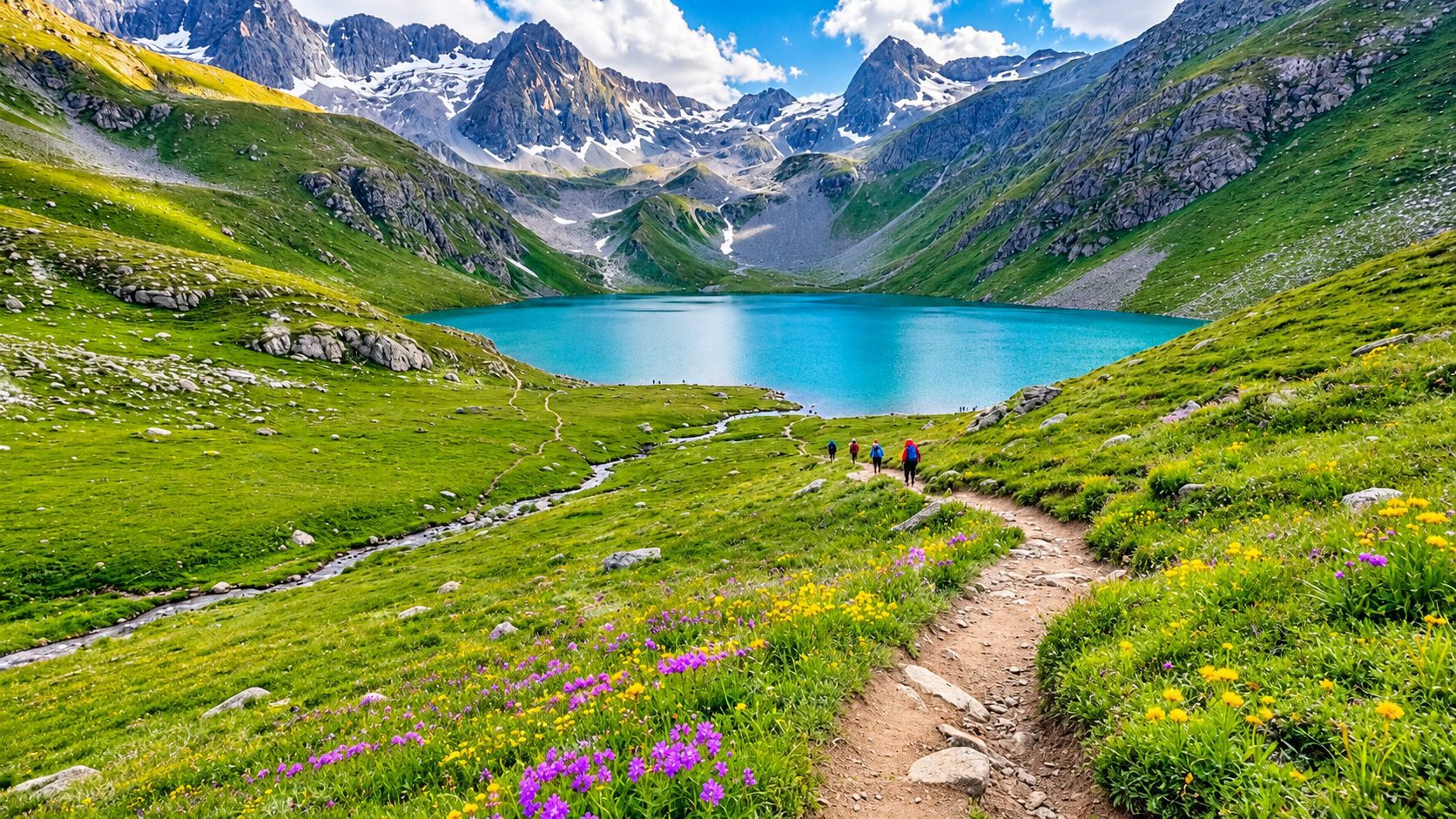
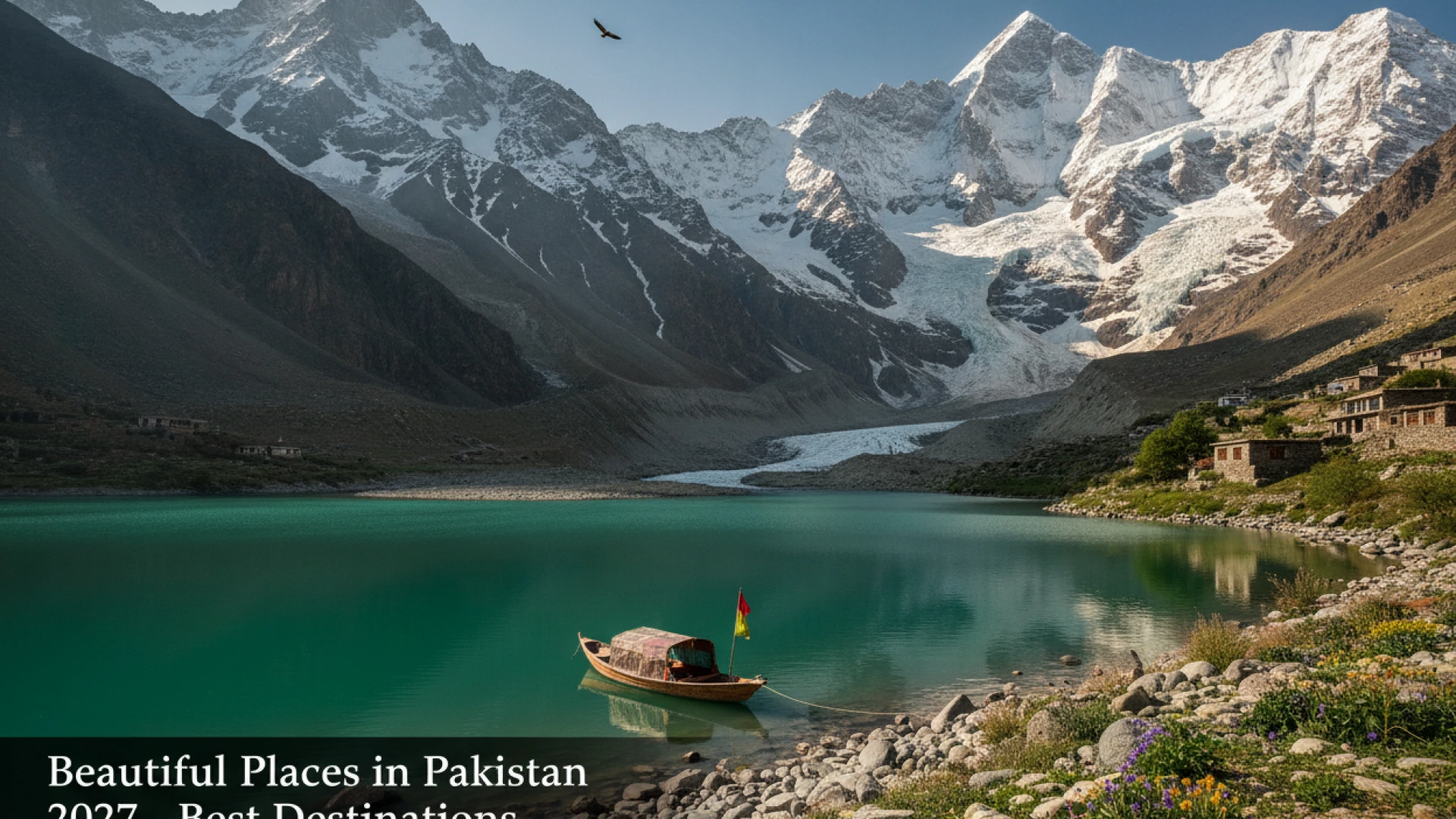
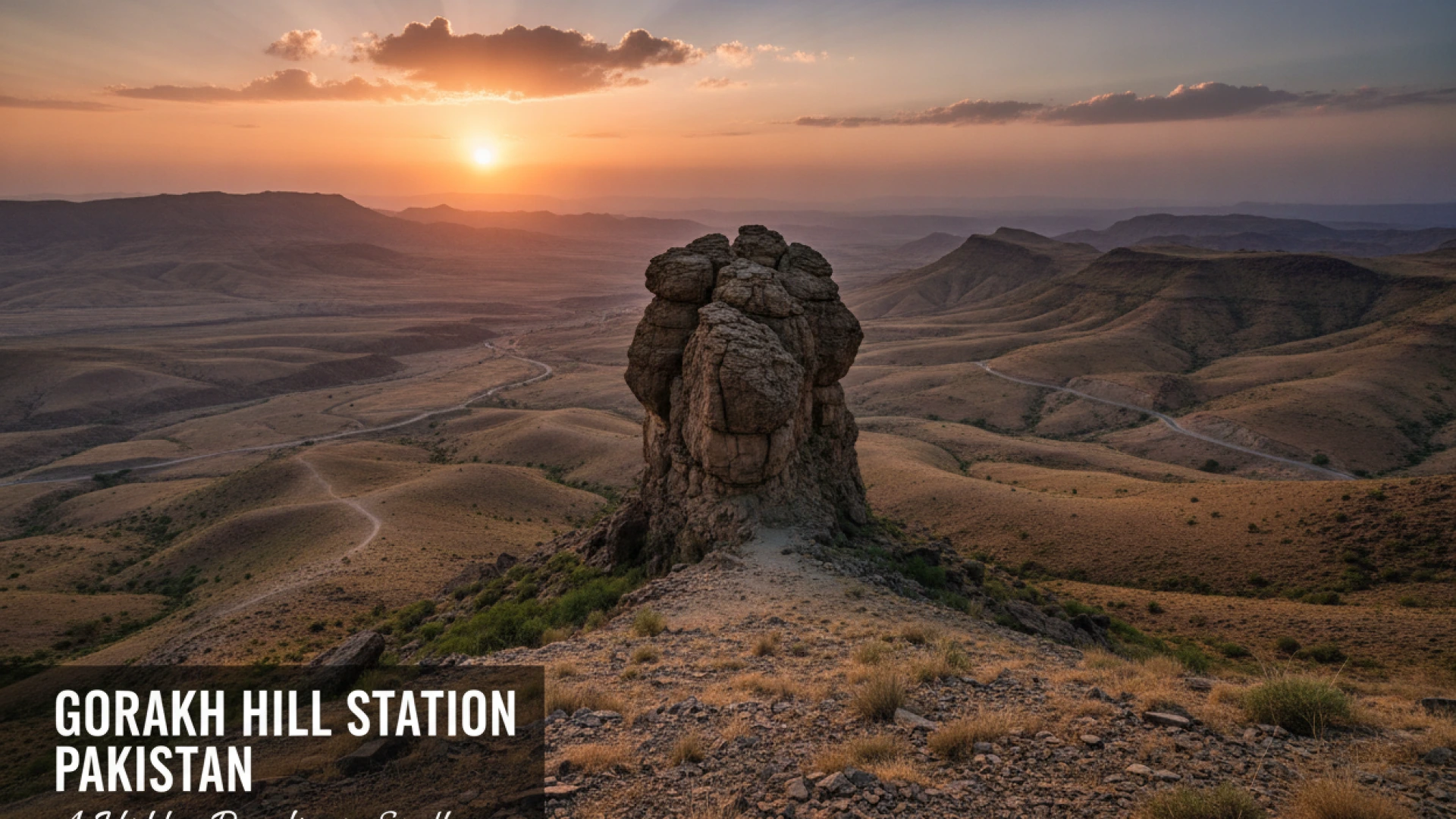
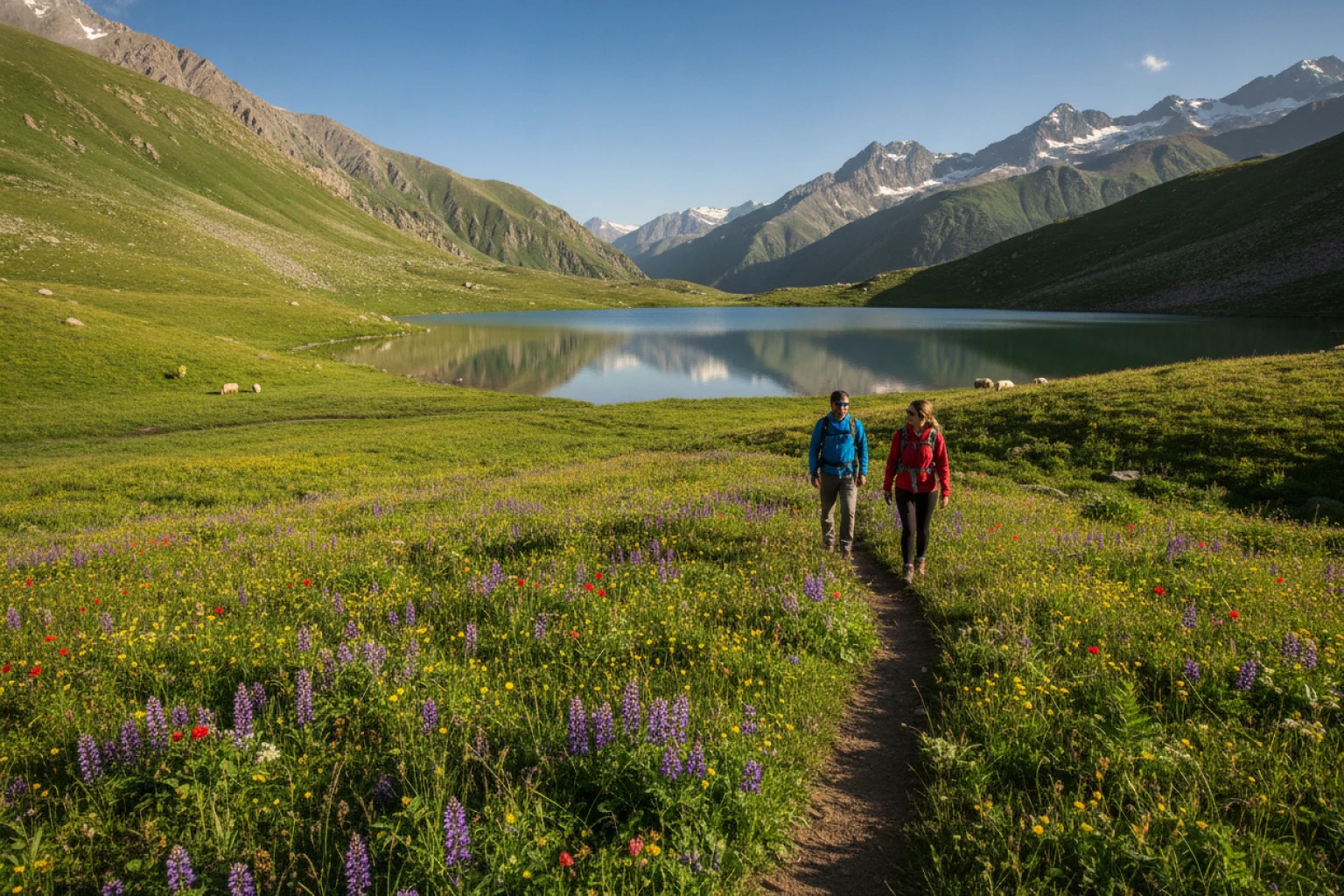
Tucked high in Azad Kashmir’s Neelum Valley, the Ratti Gali Lake trek leads to an amphitheater of jagged peaks surrounding an alpine glacial basin sitting at 12,130 feet (3,700 meters). Fed directly by the hanging glaciers and snowmelt of the Hindu Raj range, the lake’s water shifts from slate gray to an impossibly vivid cobalt depending on the cloud cover. It has earned iconic status among Northern Pakistan’s trails, not just for the destination itself, but for the dramatic contrast of red-tinted alpine blooms spilling across meadows that feel cut off from the rest of the valley.
The journey starts down at Dowarian, an emerald village beside the Neelum River. From there, the terrain transitions quickly as you grind up toward the high-altitude basecamp, passing through dense pine forest before breaking into broad tundra. Along the ridge lines, clear days reward you with sweeping views toward the distant Karakoram foothills.
What makes this route so popular—and occasionally misunderstood—is its accessibility:
- Time commitment: Usually 1 to 2 days, depending on whether you camp under the stars at basecamp or attempt an aggressive round-trip push.
- Trail profile: A rugged, two-hour 4×4 jeep track from Dowarian followed by a moderate 2-to-3-hour foot ascent.
- Fitness requirement: Manageable for adventurous beginners with steady stamina, though the thin air above 12,000 feet quickly humbles anyone who rushes the incline without a proper breather.
It is easy to underestimate the trail because the walking distance seems short on paper. However, unacclimatized hikers often run into trouble by skipping an overnight rest near basecamp. Below, we break down the practical route details, seasonal windows, and how to pace yourself so you actually enjoy the summit rather than battle altitude sickness.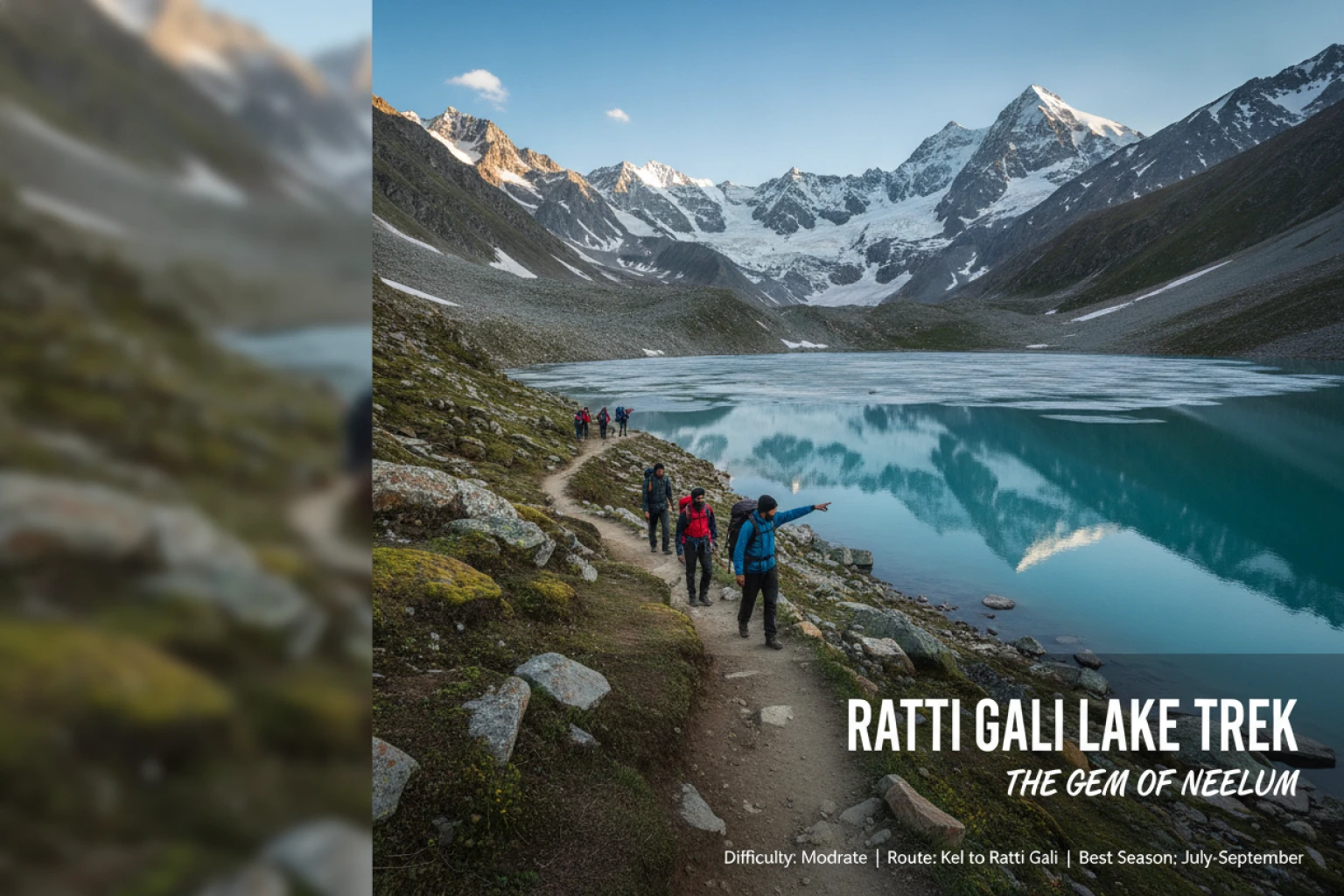
How Difficult Is the Ratti Gali Lake Trek for Beginners?
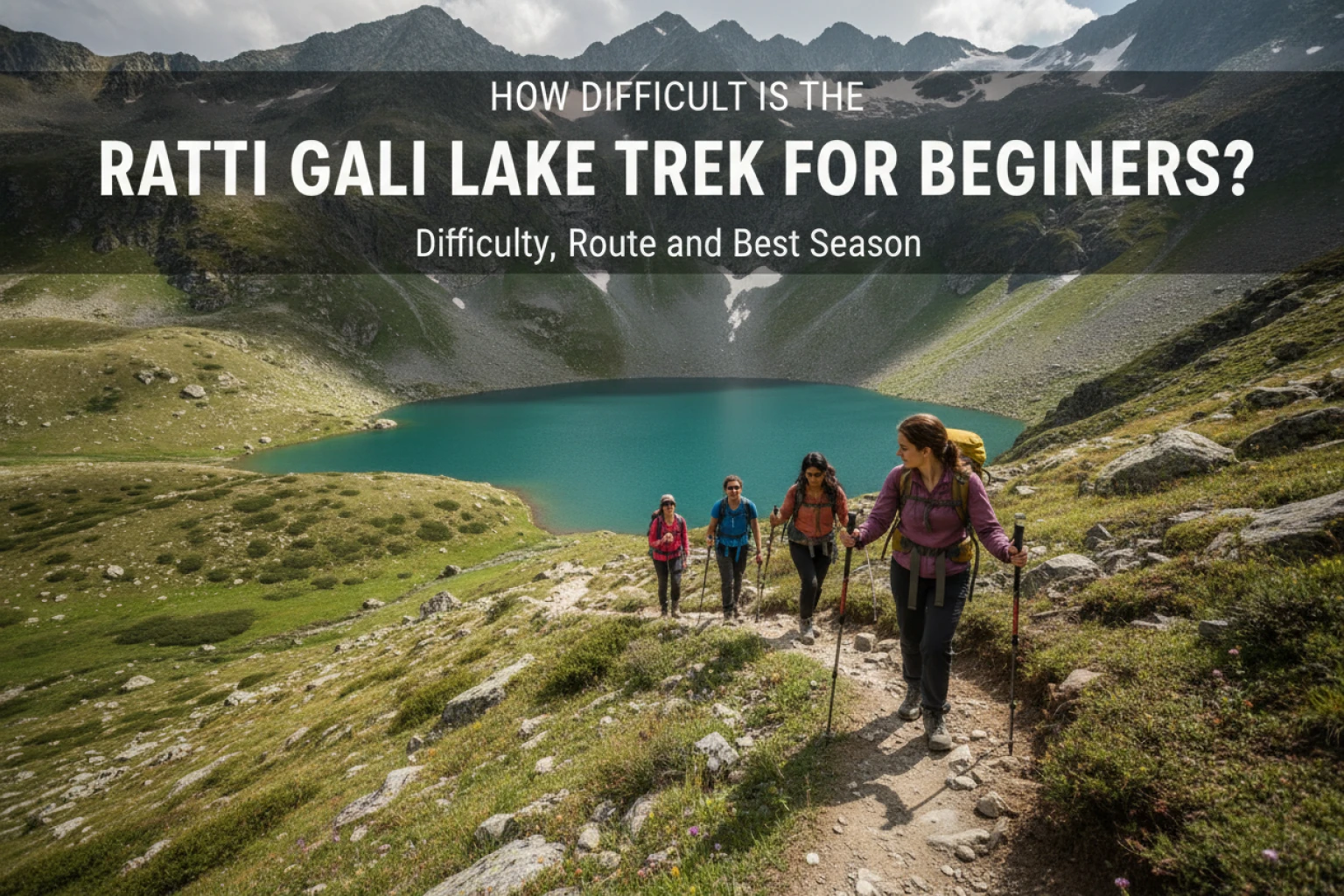
On paper, the hike sounds deceptively mild: a short two-to-three-hour walk from the 4×4 jeep drop-off point to the water’s edge. In reality, the Ratti Gali Lake trek sits firmly at a moderate difficulty grade, and it catches underprepared first-timers off guard every summer.
The real challenge isn’t technical climbing—it’s the terrain paired with a brutal altitude jump. Most travelers hire a local jeep in Dowarian village (around 5,300 feet) and bounce up a rough track to the base camp in under three hours. Stepping out of the vehicle and immediately hiking into thin air up to 12,130 feet gives your body zero time to acclimatize. Acute Mountain Sickness (AMS) is a genuine threat here; lightheadedness, throbbing temples, and nausea frequently cut trips short before hikers even reach the shore.
If you skip the jeep entirely and walk from Dowarian, you’re looking at an exhausting 8-to-10-hour slog over 18 kilometers that no beginner should attempt.
Even from the standard jeep turnaround, the trail is unpaved, slick with mud after rain, and littered with loose shale and glacial moraine. You will lose your footing if you hike in flat-soled sneakers.
To tackle this safely as a novice, measure yourself against a few practical baselines:
- Cardio stamina: You should be comfortable climbing four flights of stairs carrying a pack without needing to sit down.
- Joint stability: Strong ankles matter more than raw leg strength on the shifting scree slopes near the final saddle.
- Hydration discipline: You need to drink at least two liters of water during the ascent—dehydration accelerates altitude sickness dramatically in dry alpine air.
If you have average fitness, take slow, rhythmic strides, and pack trekking poles, the lake is well within reach. Just don’t race the local porters up the ridge; your lungs will regret it within twenty minutes.
Step-by-Step Route Breakdown: From Islamabad to the Lake Shore
Getting to the lake isn’t just a simple walk; it’s an evolving transit puzzle where smooth asphalt gives way to sheer cliff edges.
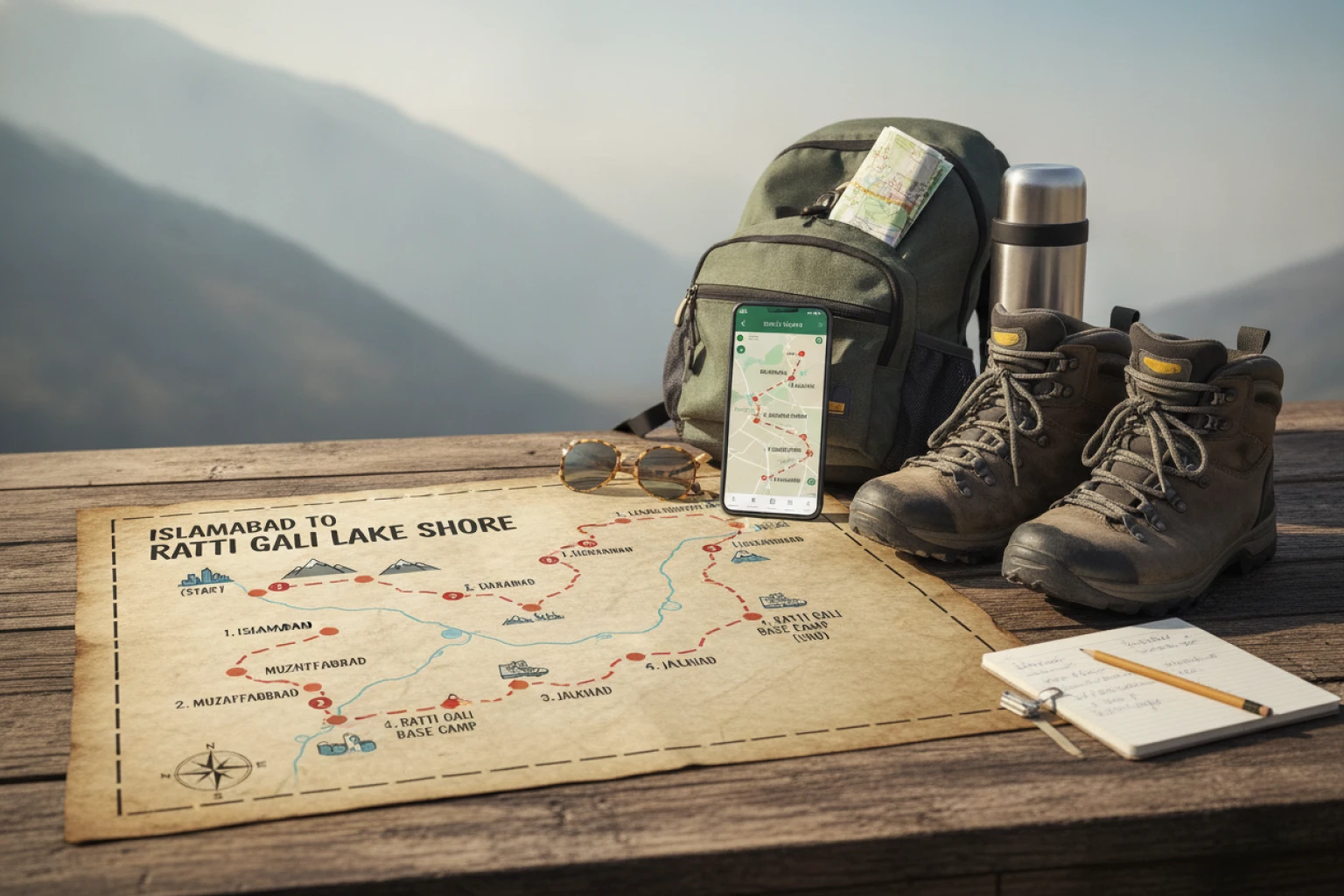
The journey kicks off with the long drive from Islamabad through Muzaffarabad and up the Neelum Valley Road toward Dowarian. While this stretch starts as a comfortable, paved highway, it narrows considerably past Athmuqam. Watch out for localized landslips during early summer—a single falling boulder can stall traffic for hours, so leave before dawn to clear the choke points early.
At Dowarian, the real test begins. You have to leave your private vehicle behind and hire a local 4×4 jeep.
- The 4×4 track to Base Camp: This is an intense, bone-rattling 2 to 2.5-hour climb over raw riverbeds, loose shale, and wooden bridges that look far too flimsy for a Land Cruiser. Hold on tight; it’s jarring, loud, and completely unpaved.
- The final foot trail: Starting from the tented base camp (around 12,100 feet), you face a 3-kilometer push up to the lake basin at roughly 12,600 feet. The elevation gain sounds modest on paper, but the thinning air makes the steep switchbacks bite. Expect 60 to 90 minutes of steady uphill hiking. If your knees give out or altitude sickness creeps in, you can hire a local horse handler at base camp for the ascent, though descending on foot is always safer.
The classic dilemma on the Ratti Gali Lake trek comes down to timing: should you camp or push through?
Pushing the entire jeep track, hike, and return drive back to Dowarian into a single day is technically doable, but it is exhausting and leaves zero margin for flat tires or afternoon thunderstorms. Pitching a tent at base camp gives you the evening chill and sets you up to hit the ridge early the next morning—well before the midday mist rolls in and hides the turquoise water.
Best Season and Ideal Months for the Ratti Gali Lake Trek
The window for the Ratti Gali Lake trek is narrow. High-altitude snow keeps the trail locked away for most of the year, leaving a reliable sweet spot between early July and late September. This is when local drivers finally clear the rough 4×4 track from Dowarian up to the base camp.
Conditions shift dramatically across this three-month window:
- July: Melting snow bridges linger over rushing streams, making water crossings lively. Wildflowers start blanketing the slopes, and daytime temperatures hover comfortably around 18°C.
- August: The valley turns an intense, lush emerald. However, the tail end of the monsoon reaches lower Neelum, bringing mud, landslide risks along the jeep track, and sudden afternoon downpours.
- September: Easily my top pick. The monsoon clears out, leaving crisp, blue skies and dry trails. The trade-off? The lush grass fades to rust, and night temperatures at the lake drop near freezing.
Testing your luck during shoulder months rarely pays off. Attempting the trek in June usually means your jeep gets stopped miles before the trailhead by stubborn avalanches, turning a short hike into a grueling, unmapped slog. By October, the base camp shuts down, temperatures plunge well below zero after sunset, and sudden blizzards can trap you without warning.
Timing your days on the mountain matters just as much as picking the right month. Alpine weather patterns here are predictable: mornings break calm and clear, but clouds roll over the surrounding ridges by 1:00 PM. Plan to hit the trail by 6:00 AM. You will bypass the sharp midday sun on the climb, dodge afternoon lightning storms, and catch the lake water at its glassy, mirror-like best.
Real Hiker Experiences and Trail Observations
Most trail itineraries treat the Ratti Gali Lake trek like an easy walk up from base camp. Talk to anyone who attempted it after a fresh afternoon downpour, and you’ll hear a very different story.
Take the classic pacing dilemma: pushing the entire ascent in a single day versus camping overnight at the base camp. Trekkers who rush the climb straight from Dowarian often arrive at the water’s edge exhausted, with pounding temples from the rapid jump to over 12,000 feet. By contrast, spending the night at base camp gives your lungs room to adjust. You wake up with actual legs under you for the final push, while day-trippers spend their return jeep ride nursing dehydration cramps.
The terrain itself shifts dramatically across the route:
- The lower meadow: Deceptively gentle until rain turns the livestock-churned soil into shoe-sucking clay.
- Stream crossings: Glacial runoff swells by midday; step deliberately on submerged, flat-faced boulders rather than wet logs.
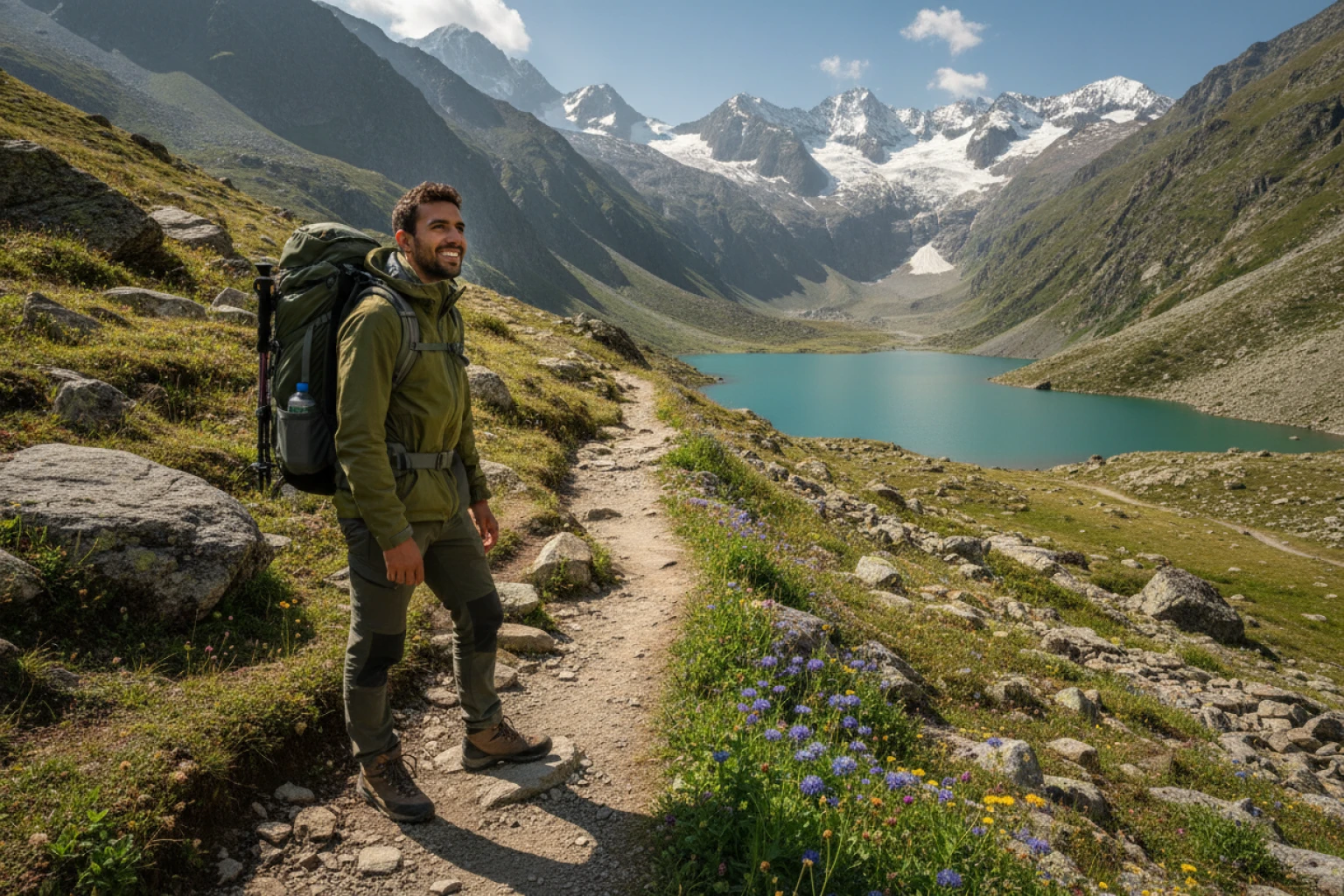
- The final ridge: The last 400 vertical feet turn into loose scree where trekking poles are essential to keep your footing from sliding backward.
If the climb sounds daunting, local handlers will offer you a mule or horse for around 3,000 to 5,000 PKR. It saves your cardiovascular stamina, but don’t assume it’s painless. Gripping a wooden pack saddle on a steep, rocking descent hammers your knees and lower back almost as hard as walking. If you’re hiking on foot, always yield to these pack animals by stepping toward the mountain wall—never stand on the cliff-edge side when a convoy passes.
For photography, skip the crowded western shore where the trail first dumps you out. Walk an extra twenty minutes around to the northern bank at dawn. The morning air is dead calm before the valley winds kick up, killing the surface chop and giving you a mirror-sharp reflection of the surrounding red peaks before the midday haze rolls in.
Essential Packing List and Official Safety Guidelines
Weather in the Neelum Valley alpine zone turns on a dime. You might start your hike under clear skies at Dowarian and find yourself dodging sleet two hours later near the bowl. Preparing for the Ratti Gali Lake trek means planning for biting ridge winds and bone-chilling dampness, even in July.
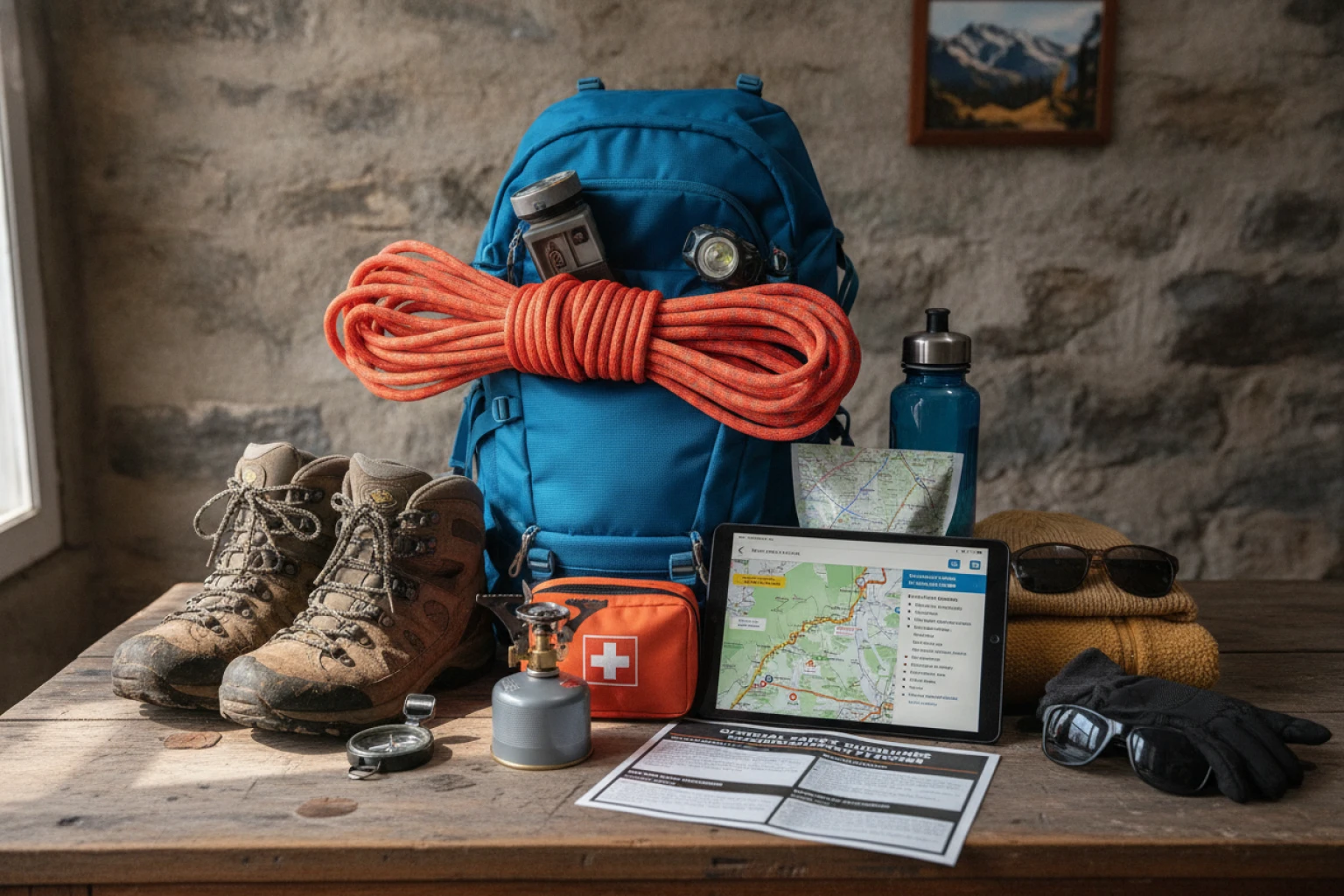
Dialing in your gear comes down to three non-negotiables:
- A strict three-layer system: Skip the cotton hoodies. Pack a synthetic or merino wool base layer to pull sweat off your skin, a mid-weight fleece or packable down jacket for camp warmth, and a dedicated waterproof, windproof hard shell. You will strip down to your base on the initial climb and throw your shell on the second you stop moving.
- Proper mountain footwear: Leave your daily road running shoes at the hotel. The final push crosses loose scree and wet glacial mud where soft trainers roll ankles and slide out. You need broken-in trekking boots with rigid ankle support and deep, lugged soles that bite into slick dirt.
- A pocket trash bag: The fragile glacial ecosystem around the lake is under heavy pressure. Pack out every scrap of waste, including snack wrappers and wet wipes, and avoid single-use plastic bottles by carrying a reusable flask with purification tablets.
Safety here is heavily localized. Both the Pakistan Tourism Development Corporation (PTDC) and the Neelum district administration strictly advise against heading past the base camp without an accredited local guide. Beyond supporting the valley’s economy, local guides track sudden weather shifts, navigate unmarked spur trails if fog drops, and coordinate with local jeep unions if an emergency evacuation is needed. Going solo to shave a few rupees off your trip budget is the fastest way to turn a manageable altitude headache into a full-blown alpine rescue.
Common Mistakes Hikers Make on the Ratti Gali Trek (and How to Avoid Them)
Most failed summits on the Ratti Gali Lake trek don’t happen because of steep ridgelines. They happen because of bad planning before a boot even touches the mud. Avoid these four missteps to keep your trip from unraveling:
Hiring any random 4×4 in Dowarian:
The two-and-a-half-hour track from Dowarian bazaar to basecamp is brutal. It’s an unpaved, boulder-strewn shelf carved into the cliffside. Never barter for the cheapest beat-up Willys jeep you find. Inspect the tires, ensure the four-wheel-drive transfer case actually engages, and pick a local driver who runs that specific gorge daily. A breakdown halfway up leaves you stranded on a scree slope with nowhere to turn around.
The “Islamabad-to-lake” sprint:
Trying to pull off the entire trip in a single 24-hour weekend is asking for acute mountain sickness. Going from near sea level to roughly 12,100 feet without a rest day leaves hikers vomiting behind their tents at basecamp. Spend a night in Keran or Dowarian first to let your body adjust to the thin air.
Ignoring the monsoon window:
The meadows peak in color between late July and mid-August, but that is also peak monsoon. The Dowarian nullah (stream) can turn into a violent wall of brown water within twenty minutes of an upstream downpour. If locals tell you a storm is brewing up-valley, stay off the jeep track. Landslides here routinely trap vehicles for days.
Hauling a heavy pack up the saddle:
The final push from basecamp takes roughly two hours, yet people still haul heavy DSLRs, spare jeans, and heavy canned food up the switchbacks. Ditch the dead weight. Your summit pack only needs water mixed with ORS (hydration salts), high-calorie trail snacks, a windproof shell, and an emergency foil blanket in case the alpine fog rolls in and drops the temperature near freezing.
learn more about this article then vist wikipedia
https://triptrial.info/pir-chinasi-azad-kashmir-explore-beautiful-mountain-views/
https://triptrial.info/travel-packages-tips-for-planning-your-perfect-holiday/
https://triptrial.info/pakistan-china-border-travel-complete-khunjerab-pass-guide/
https://triptrial.info/beautiful-place-in-pakistan/
https://triptrial.info/best-hiking-trails-near-me-top-hiking-trips-and-adventures/
Gorakh Hill Station Pakistan – A Hidden Paradise in Sindh – Trip Trial