



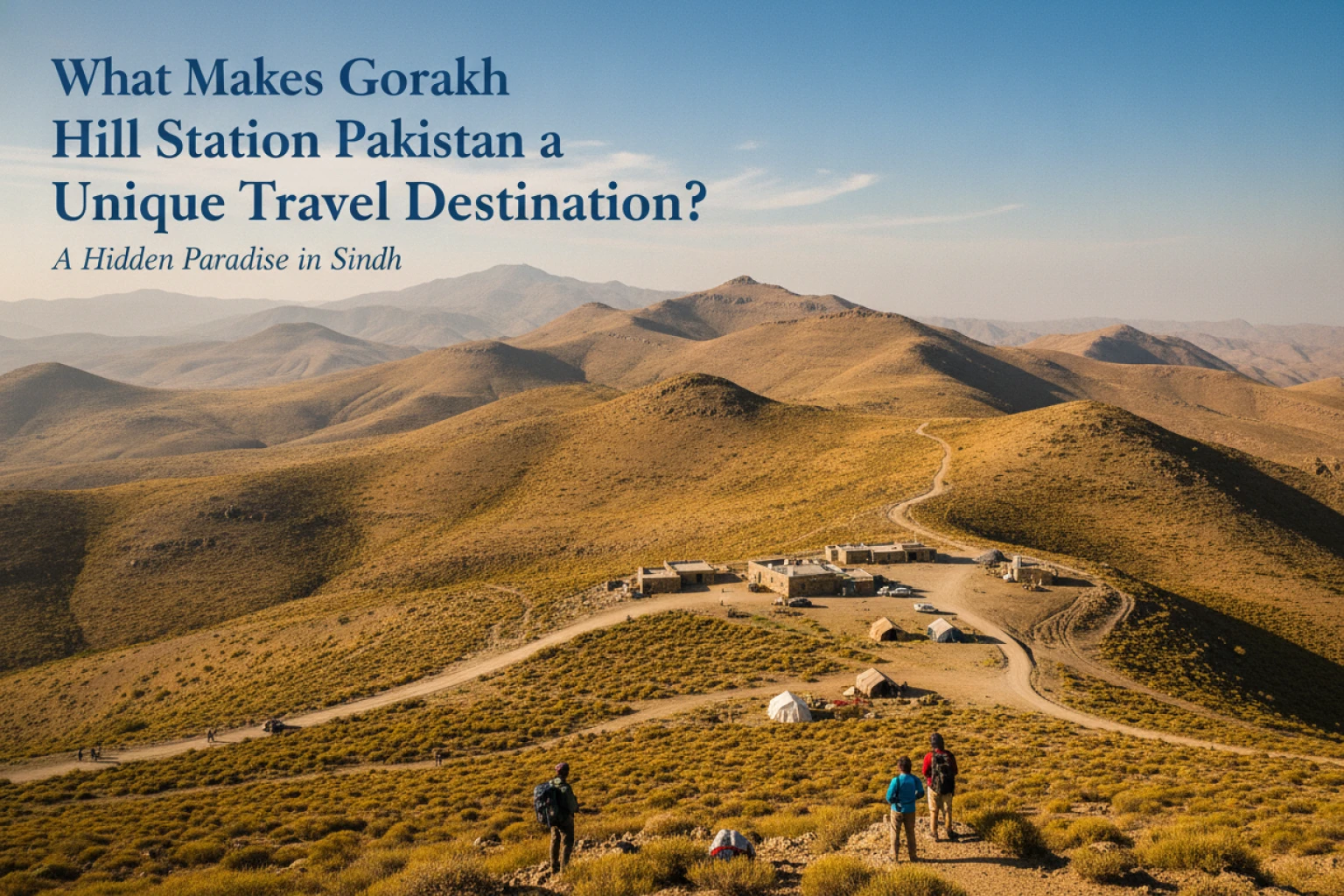
What Makes Gorakh Hill Station Pakistan a Unique Travel Destination?
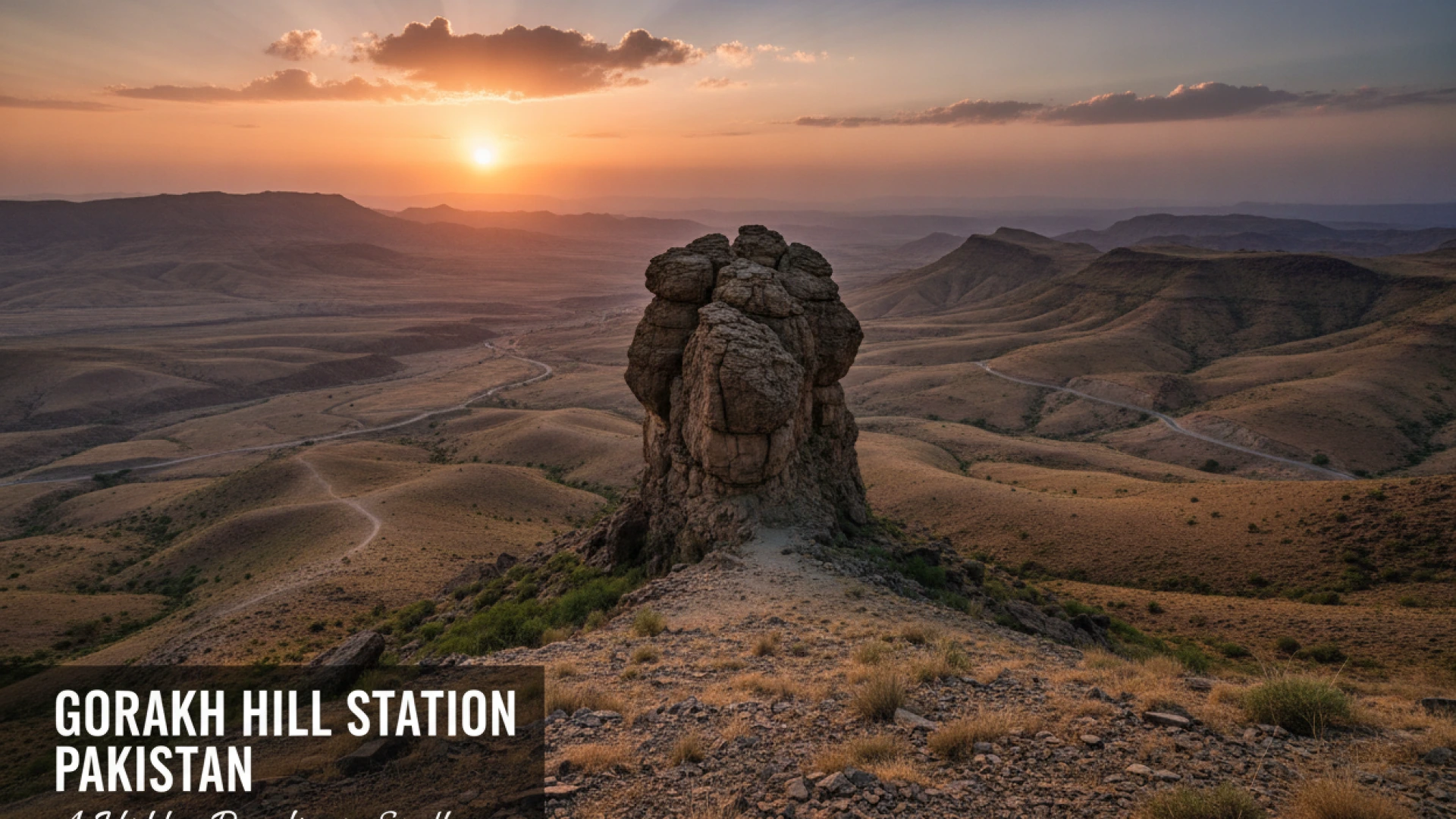
Mention Sindh to most travelers, and their minds jump straight to sweltering plains, ancient ruins, and humid coastlines. But climb deep enough into the Kirthar Mountains, and the desert heat completely falls away. Perched at an elevation of 5,688 feet (1,734 meters), Gorakh Hill Station Pakistan offers an alpine anomaly: sub-zero winter nights and crisp summer breezes in a province better known for 45°C scorchers.
Locals often call it “The Murree of Sindh,” yet the comparison only goes skin-deep. You won’t find pine forests, chairlifts, or commercial shopping malls here. Instead, the real draw is the raw, untamed transition. Leaving Dadu District, you trade baking lowlands for steep limestone ridges, winding up narrow tracks until the air turns sharp and cool. It feels less like a standard resort town and more like an isolated, windswept frontier.
That rugged isolation means it isn’t for everyone—luxury seekers usually leave disappointed by the basic summit infrastructure. However, the plateau hits the sweet spot for self-reliant travelers who value dramatic topography over room service:
- Astrophotographers chasing zero light pollution and razor-sharp views of the Milky Way core.
- High-altitude campers looking to pitch tents right on the edge of the escarpment for sub-zero winter chills.
- Adventure road-trippers itching to test low-range 4x4s on the punishing hairpins past Wahi Pandi.
If you are planning the ascent, you need practical expectations. The road will beat up an ordinary sedan, seasonal winds can snap cheap tent poles, and running water is a luxury at the top. But if you want to stand on Sindh’s highest ridge watching an ocean of desert clouds roll in beneath your boots, nothing else in the south comes close.
How to Plan Your Route and Transportation from Karachi to Gorakh Hill
The journey from the coast to the Kirthar Mountains takes you through some of the rawest stretches of interior Sindh. To reach Gorakh Hill Station Pakistan, plot out a roughly 400-kilometer push north from Karachi.
Start before dawn via the M-9 motorway to Jamshoro, then cut across to the Indus Highway (N-55). You will pass through Sehwan before branching off toward Dadu and the smaller agricultural hub of Johi. The highway tarmac is decent in stretches, but heavy truck traffic and sporadic patchwork near Sehwan can slow your pace. Top off your tank in Dadu; after that, reliable high-octane or clean diesel becomes hard to find.
Past Johi, the asphalt tapers off at Wahi Pandi, the definitive staging ground.
Do not try pushing a front-wheel-drive sedan, a crossover, or even a factory AWD SUV past this point. Leave your vehicle in one of the guarded, paid parking compounds in town. The final 50-kilometer track shifts into a punishing, rock-strewn incline with double-digit hairpin gradients. Local drivers running stripped-down Suzuki Potohar 4x4s know how to manage the boiling radiators and clutch wear. Hire one here; their short wheelbases and low-range gearing are non-negotiable for the terrain.
Plan your transit windows carefully:
- Karachi to Wahi Pandi: Expect 6 to 7 hours of steady highway cruising.
- The 4×4 Ascent: Budget a bruising 2 to 2.5 hours to cover the final stretch from base camp up the switchbacks to the summit ridge.
Safety comes down to timing and local protocol. Check in at the Wahi Pandi police post before heading up the mountain, especially if you are traveling late in the afternoon. Breakdown recovery on the pass is essentially non-existent beyond the local jeep drivers hauling spare tires and tow straps, so never attempt the final climb after dusk.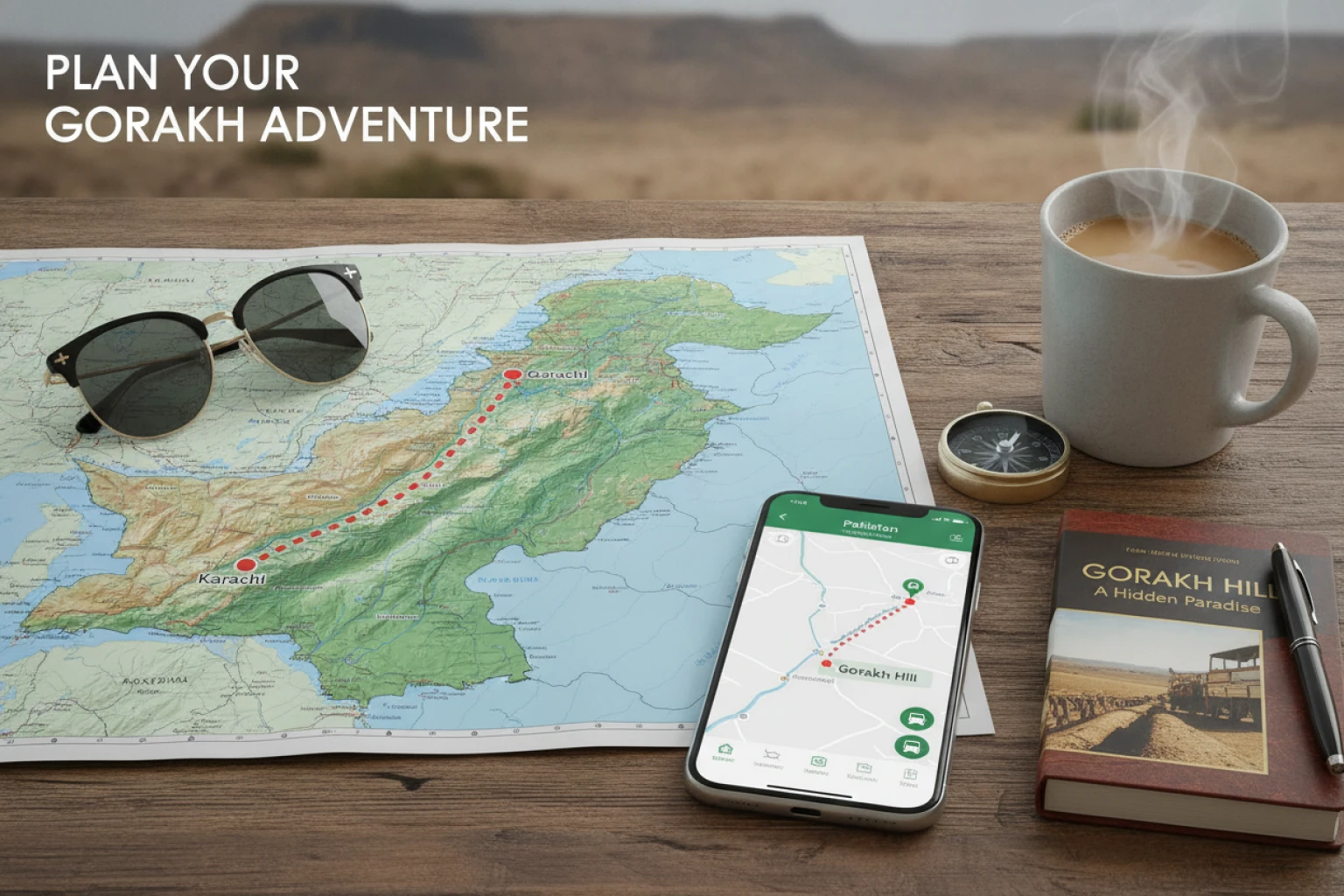
When Is the Best Time to Visit Gorakh Hill Station for Freezing Temperatures and Clear Skies?
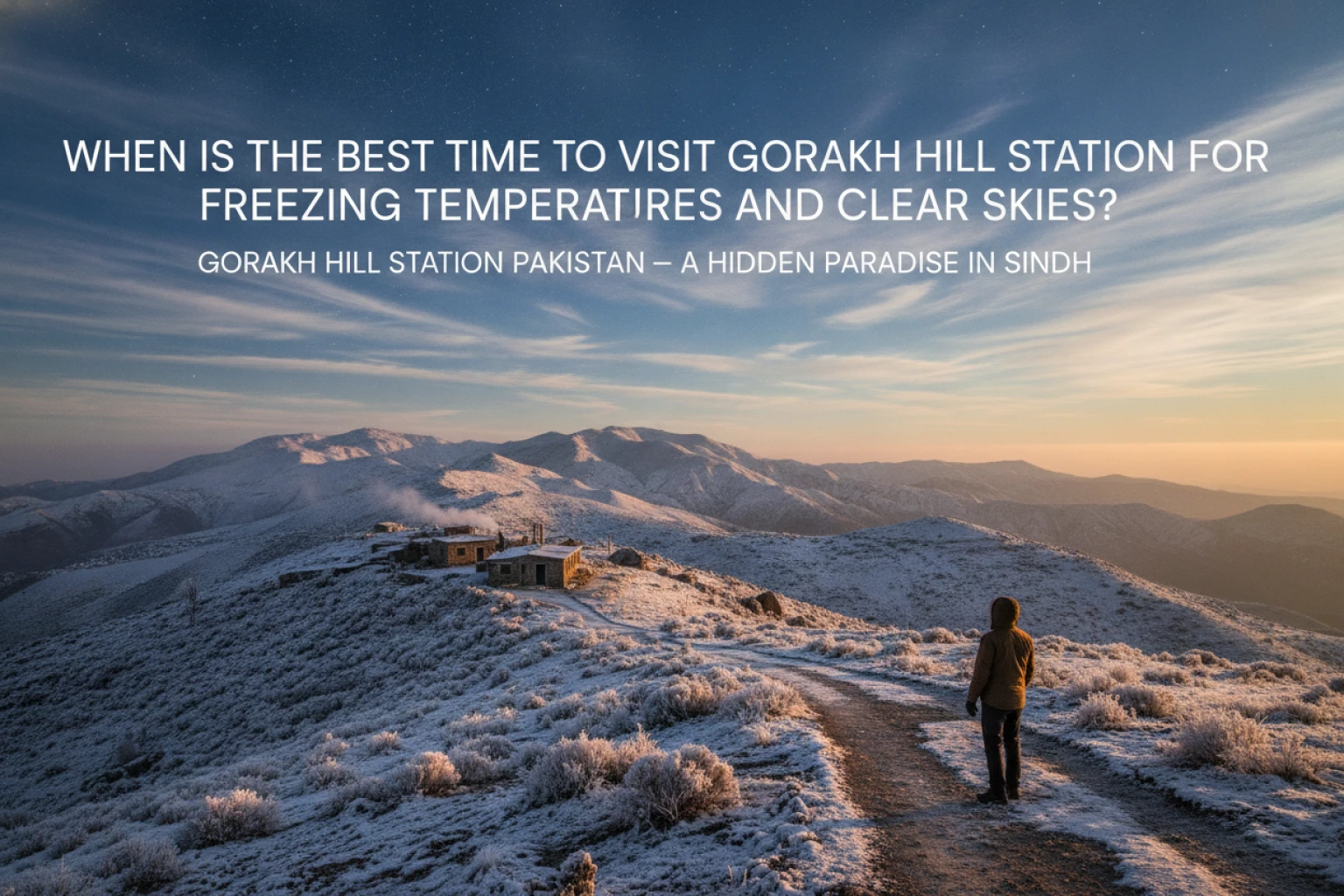
If you are chasing bone-chilling cold, plan your trip between mid-December and early February. While the plains of Sindh bake for most of the year, winter nights at Gorakh drop well below freezing, routinely hovering between -2°C and -5°C. In contrast, summer here is remarkably mild; while Dadu sizzles past 45°C, the plateau rarely tops 30°C during the day, cooling down pleasantly by dusk.
Snow remains a rare spectacle on Gorakh Hill Station Pakistan, but it happens. Historic freezes in 2008 and brief dustings during intense cold waves in recent winters coated the ridge in white, sparking massive influxes of local travelers. Just don’t plan a vacation exclusively for snowfall—treat it as a rare meteorological bonus rather than a guaranteed winter feature.
For amateur astronomers and astrophotographers, this plateau offers some of the lowest light pollution in southern Pakistan.
- Timing the Milky Way: Target the new moon phase between April and September to capture the galactic core stretching over the rugged Kirthar range.
- Winter stargazing: December and January bring crisper, drier air that sharpens planetary viewing, though the sheer cold means you will burn through camera batteries twice as fast.
One window you should generally avoid is the monsoon stretch from July to August. Rains in the Kirthar Mountains transform dry ravines into violent flash floods, locally called Nains. These torrents rip across low-water crossings on the road from Wahi Pandhi, stranding 4x4s for hours—or days—until the runoff recedes. If the weather forecast shows active rain fronts moving toward southern Balochistan or western Sindh, stay home. The best travel happens when the winter winds stabilize, leaving behind glass-clear skies and crisp, sub-zero mountain air.
What to Expect from Accommodation, Food, and On-Ground Infrastructure
Visiting the plateau means adjusting your expectations early: Gorakh Hill Station Pakistan is rugged, isolated, and largely off-grid. If you arrive expecting resort amenities, you will be disappointed. Approach it as an alpine outpost, however, and you will navigate the rough edges just fine.
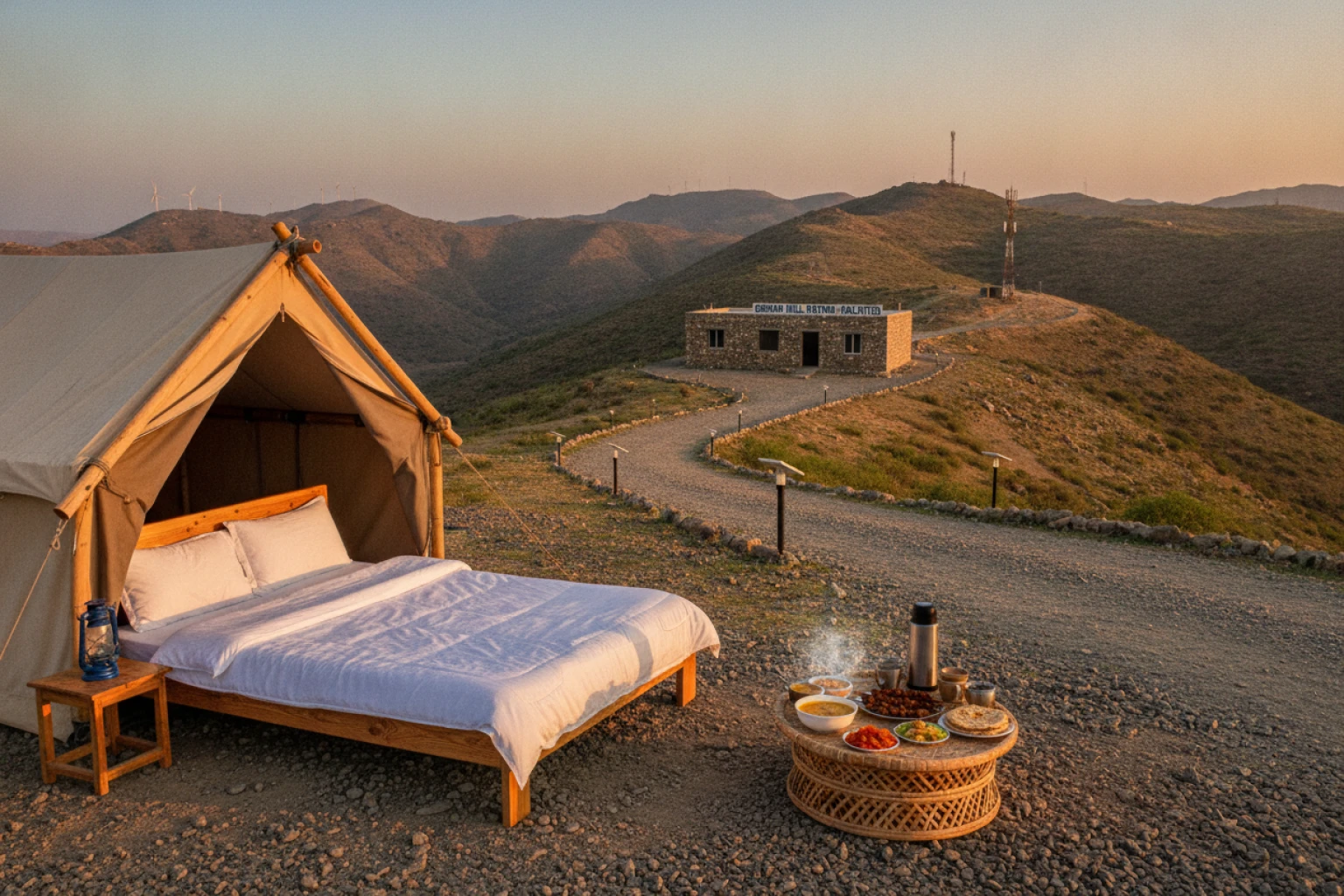
Your primary lodging choice boils down to the government-run Gorakh Hills Development Authority (GHDA) rest houses versus pitching your own tent. The GHDA rooms offer solid brick walls, basic bedding, and shelter from the biting Kirthar winds. That said, maintenance can be hit-or-miss, with leaky taps and aging mattresses being common complaints. Wilderness camping gives you unobstructed views of the night sky, but the plateau floor is rocky and wind-battered. If your tent lacks heavy-duty aluminum poles and solid guy lines, the gusts will flatten it before midnight.
Infrastructure limitations dictate your daily routine here:
- Power: Municipal electricity does not exist on the summit. The site runs on shared evening generators that usually cut off around midnight. Bring heavy-duty power banks to keep your gear alive.
- Water: Every drop is trucked up the mountain. Running water in rest house bathrooms is strictly rationed, and water pressure is minimal. Treat water as a finite survival resource; pack extra wet wipes and dry shampoo.
- Connectivity: Signal strength drops sharply as you climb. Ufone and Zong occasionally ping near the eastern cliff edges, but Telenor and Jazz are virtually dead on the main plateau. Download your offline maps before leaving Dadu.
For food, local small dhabas serve warm, straightforward staples. You can count on fresh chicken karahi, spiced daal, hot rotis, and strong, sweet Sindhi doodh patti. Service takes time since ingredients are prepped to order over gas burners. Carrying supplemental non-perishable rations—nuts, dried fruit, protein bars, and plenty of bottled drinking water—is non-negotiable.
Public restrooms near the camping grounds are basic and often run out of wash water by midday. Stick to private rest-house facilities if you can. As for physical safety, the plateau is peaceful and monitored by local guards, but unlit cliff edges pose a genuine hazard after dark. Keep a dependable headlamp on you at all times.
Critical Travel Mistakes and Safety Hazards to Avoid on the Plateau
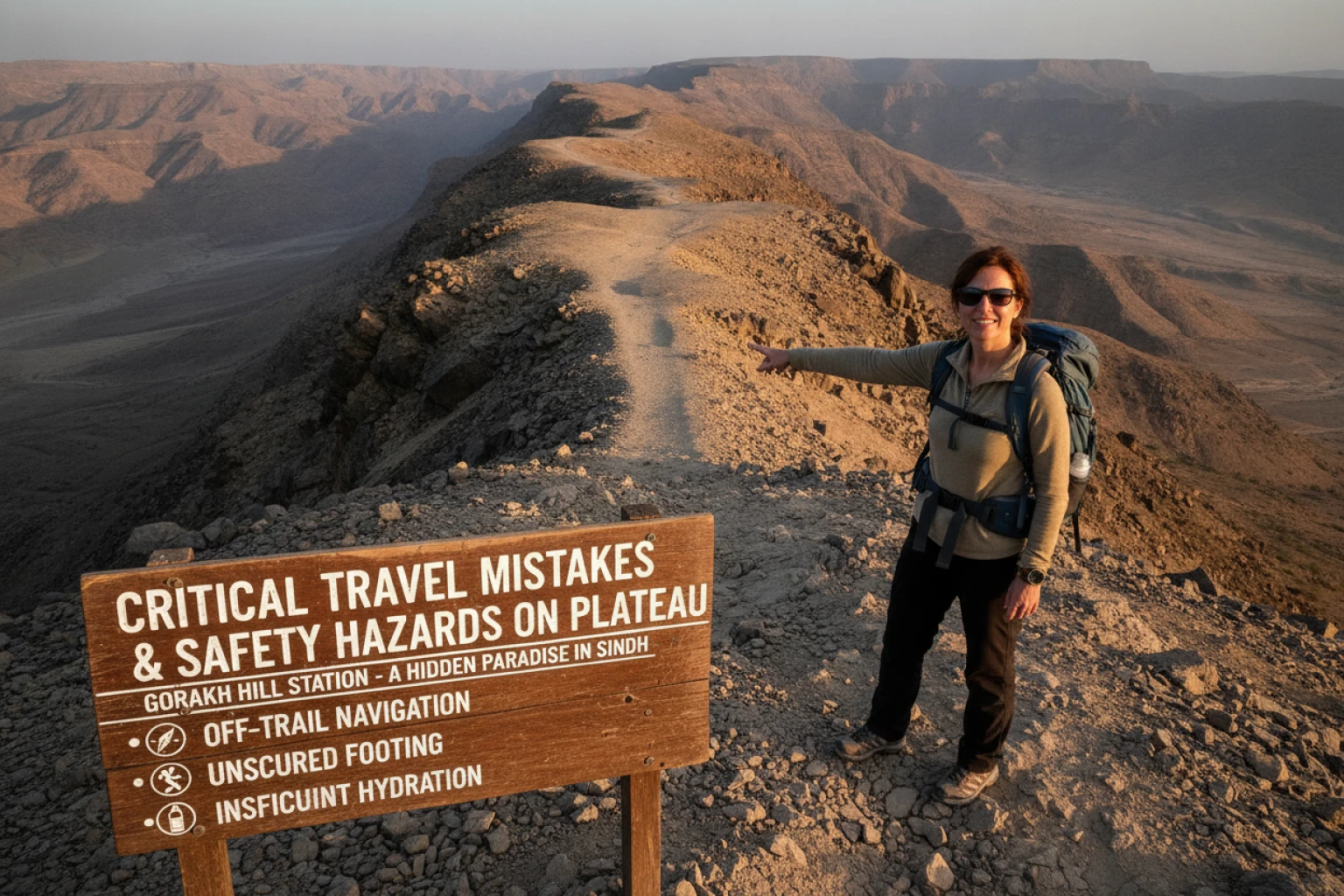
The journey up to Gorakh Hill Station Pakistan catches dozens of confident drivers off guard every month. The asphalt looks decent enough leaving Dadu, but the final 35-kilometer climb into the Kirthar Range is brutal. Attempting this ascent in a city crossover or a standard all-wheel-drive car is asking for burned clutches and brake failure. The incline features violent hairpin turns on crumbling tarmac with zero guardrails. Unless you have serious mountain driving chops and a proper 4×4 fitted with a low-range gearbox, leave your personal vehicle at Wahi Pandi. Hire a seasoned local driver who runs an old-school FJ40; they know every blind crest and loose gravel patch by heart.
Another frequent miscalculation is underestimating the weather whiplash. You might leave Sehwan or Hyderabad sweating through a 38°C afternoon, only to step out on the plateau into a bitter, wind-whipped 5°C evening. Hypothermia is a genuine risk here. Ditch the thin cotton hoodies and pack windproof outer shells, thermal base layers, and fleece beanies.
Before heading up, sort your supplies carefully:
- Pack an expedition-grade first-aid kit: Gorakh has no hospital, trauma center, or reliable pharmacy. If an emergency strikes, an evacuation back down the mountain takes at least three bumpy hours. Bring broad-spectrum antibiotics, rehydration salts, altitude sickness remedies, burn creams, and splinting materials.
- Carry enough drinking water: Tap infrastructure is essentially nonexistent, and groundwater is scarce and brackish.
- Carry out every scrap of your trash: Wind speeds at 5,600 feet scatter disposable cups and snack wrappers miles across the ridge, choking native wildlife.
Treat this fragile plateau with the respect it demands. Pack heavy-duty garbage bags in your rig, strictly follow Leave No Trace principles, and leave the ridgeline as stark and pristine as you found it.
Real Case Studies: Typical Itineraries Tested by Adventure Travel Groups
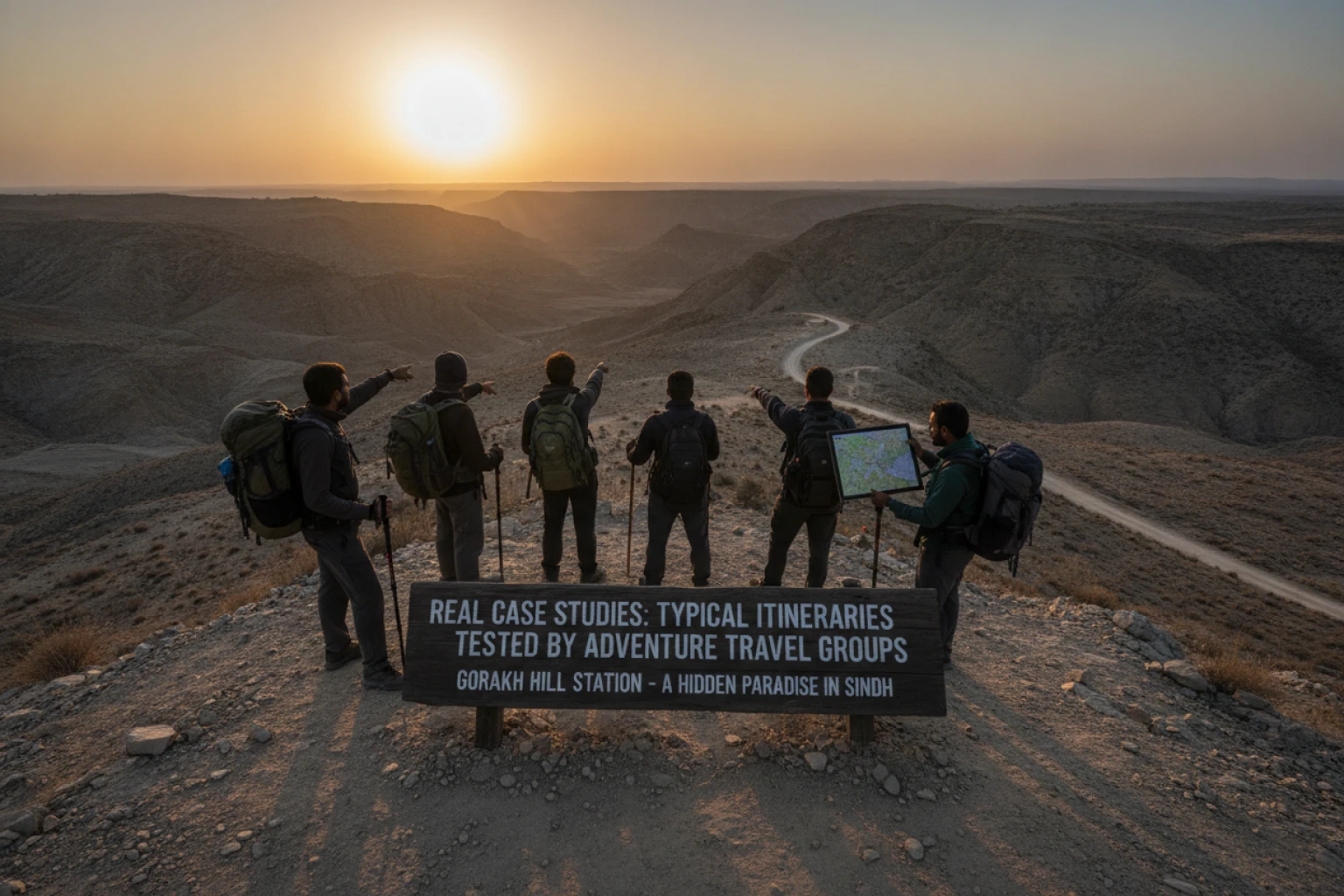
Most commercial trips to Gorakh Hill Station Pakistan run on a compressed 2-Day/1-Night loop out of Karachi or Hyderabad. It sounds simple on paper: roll out by midnight, hit Dadu for breakfast, swap your sedans for local 4x4s at Wahi Pandi by noon, and reach the summit ridge before sunset.
In reality, running this route smoothly demands tight operational timing. Miss your dawn departure from the highway, and you end up climbing the switchbacks in the dark—a bad move on unlit roads.
The Standard 48-Hour Loop and Realistic Costs
Having monitored dozens of club departures, the budget always pivots on the transfer at the base. You can split high-level group expenses fairly predictably:
- Wahi Pandi 4×4 Jeeps: Expect to pay between PKR 10,000 to 14,000 round-trip per vehicle (driver and fuel included, fitting roughly six passengers).
- Base Camp Costs: Basic dome tents rent for PKR 1,500 to 2,500 a night, while government rest-house rooms require advance cash bookings and push higher.
- Transit Overhead: Budget PKR 3,000 to 4,500 round-trip for M-9 and N-55 highway tolls per coaster or private van.
The Wahi Pandi Bottleneck
The real stress test happens at the Wahi Pandi staging area. Over public holidays like Eid or winter long weekends, this dusty foothill outpost descends into gridlock.
Dozens of convoys arrive at once, local jeeps run short, and unregulated private drivers start price-gouging stranded groups. If you arrive past 1:00 PM without a pre-reserved, locally vetted jeep driver, you risk spending half your summit night idling at the base.
The Smarter 3-Day Alternative
Rushing down the mountain after three hours of sleep ruins the return leg. Instead, we advocate an extended slow-travel route.
Spend your first night at the summit, descend on day two, and detour east to Sehwan for sunset at the Sufi Shrine of Lal Shahbaz Qalandar. Wrap the third morning with an architectural walk through the massive walls of Kot Diji Fort before taking the highway home. It trades a frantic sprint for genuine cultural immersion—and saves your spine from two brutal, back-to-back driving days.
Expert-Backed Checklist: Official Guidelines and Packing Essentials for Sindh’s Hidden Paradise
Planning a summit trip up to Gorakh Hill Station Pakistan requires more than just throwing an extra hoodie into a duffel bag. The plateau sits at over 5,600 feet, where desert heat suddenly shifts into punishing, sub-zero wind chills once the sun drops behind the Kirthar range.
Both the Sindh Tourism Development Corporation (STDC) and the Gorakh Hills Development Authority (GHDA) require confirmed resort or campsite permits before passing the Wahi Pandi checkpoint. Don’t risk a walk-in during peak winter weekends; the limited resort rooms fill up months ahead, and setting up camp during high-velocity gusts without reserved windbreak spots is a recipe for hypothermia.
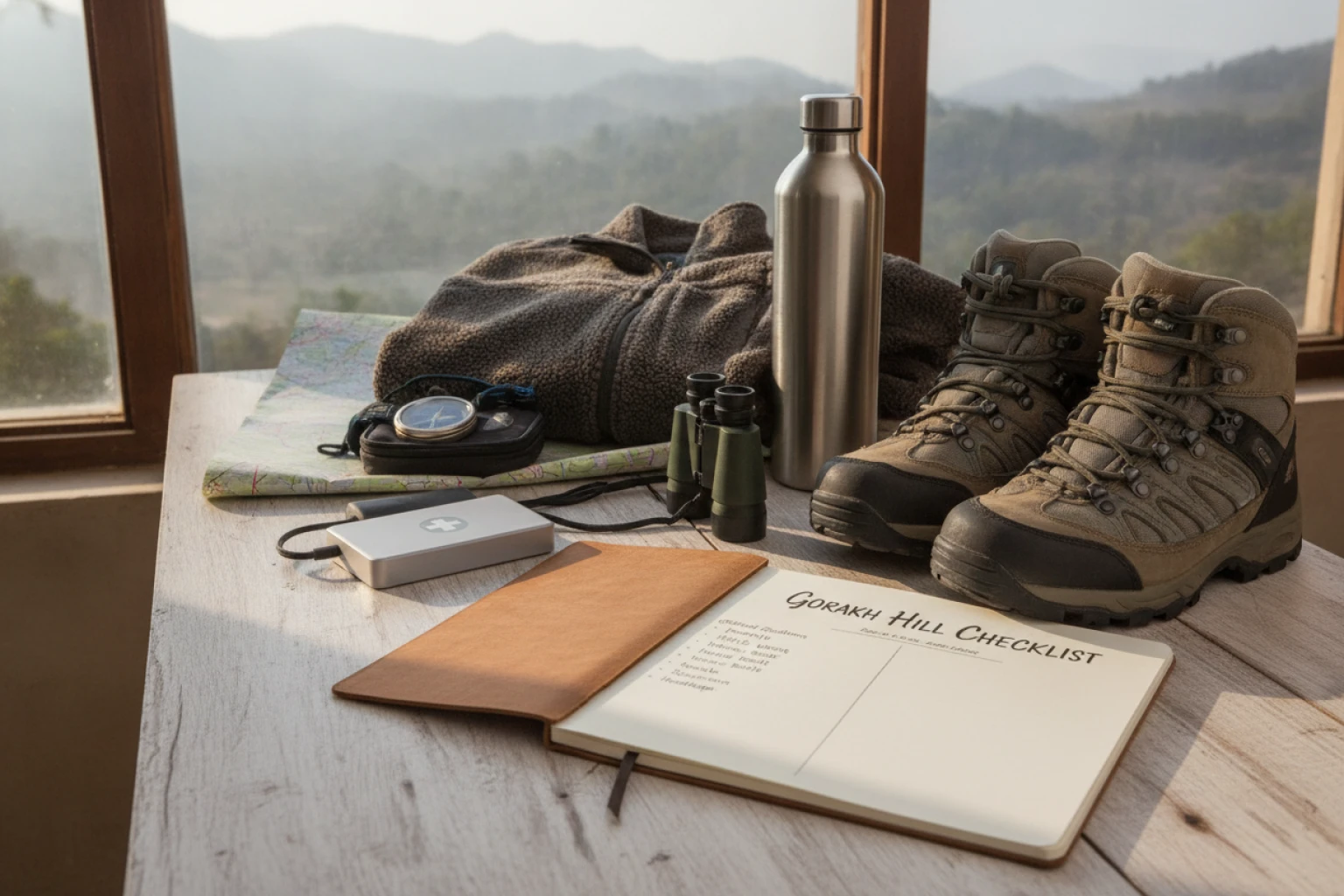
Skip the lightweight gym wear. Your pack needs gear suited for rugged, arid terrain with drastic temperature swings:
Sub-zero rated sleeping bag
Standard rental tents rarely keep out the biting ridge draft.
- Hardshell windbreaker: A heavy fleece alone won’t cut it against the plateau’s dry gale-force winds.
- Heavy-duty trekking boots: The limestone scree around Benazir Point will shred soft running sneakers within an hour.
- Electrolyte packs and extra water: High altitude combined with dry mountain air dehydrates you twice as fast as the plains below.
- Satellite-assisted power bank or offline maps: Cellular coverage drops entirely about 15 kilometers past Wahi Pandi.
Save the local Dadu District emergency control room contact and register your vehicle with the 4×4 Driver Association at the Wahi Pandi base before heading up. These drivers know the steep hairpin switchbacks intimately; their local dispatch is your only reliable recovery lifeline if an axle snaps or a radiator boils over.
Finally, weigh your travel style honestly. If you crave autonomy, have an experienced mountain driver, and can manage your own rations, a private expedition offers unmatched peace. But if it’s your first high-altitude desert crossing, opt for a managed commercial group. You’ll trade away total solitude in exchange for vetted 4×4 transfers, guaranteed meal logistics, and pre-pitched camps that won’t blow down mid-gale.
FAQS
Can you drive a standard sedan all the way to Gorakh Hill Station Pakistan?
No, and attempting it usually ends with a cracked oil pan or a burnt-out clutch. The highway from Karachi to Dadu or Johi is smooth enough for a city car, but the climb beyond Wahi Pandhi is another beast entirely. The final 30-plus kilometers feature brutal switchbacks, unpaved gravel, and steep inclines. Leave your personal vehicle at basecamp and hire a local 4×4 Potohar or Toyota Hilux with a driver who knows how to handle blind corners on the Kirthar range.
When is the worst time to visit?
Most travelers think winter is the only hurdle, but summer afternoons are the real trap. While the plateau drops to a pleasant 18°C–20°C at night during June, the transit through Dadu can hit an unbearable 48°C. If your jeep breaks down mid-afternoon on the lower ascents, heat exhaustion sets in fast.
Avoid visiting during:
- Mid-monsoon (late July to August): Flash floods occasionally cut off causeways around Nai Gaj, stranding tourists for days.
- Peak winter weekends without reservations: When temperatures hover near freezing (0°C to -2°C) in December and January, the limited heated rooms sell out, and sleeping in cheap tents without zero-degree sleeping bags is dangerously cold.
Is the area safe for solo travelers and families?
Generally, yes. The route has a heavy local police presence, and the community relies on tourism income. The bigger hazards are logistical, not criminal. There are no functioning hospitals on the summit—only basic first-aid dispensaries with erratic supply chains.
Bring personal prescription medications, basic altitude sickness remedies for sensitive travelers, and a surplus of drinking water. Do not expect steady cell service either; Zong catches sporadic signals near the edge, but everything else flatlines once you clear the lower checkposts.
learn more about this article then vist wikipedia
https://triptrial.info/pir-chinasi-azad-kashmir-explore-beautiful-mountain-views/
https://triptrial.info/travel-packages-tips-for-planning-your-perfect-holiday/
https://triptrial.info/pakistan-china-border-travel-complete-khunjerab-pass-guide/
https://triptrial.info/beautiful-place-in-pakistan/
https://triptrial.info/best-hiking-trails-near-me-top-hiking-trips-and-adventures/