


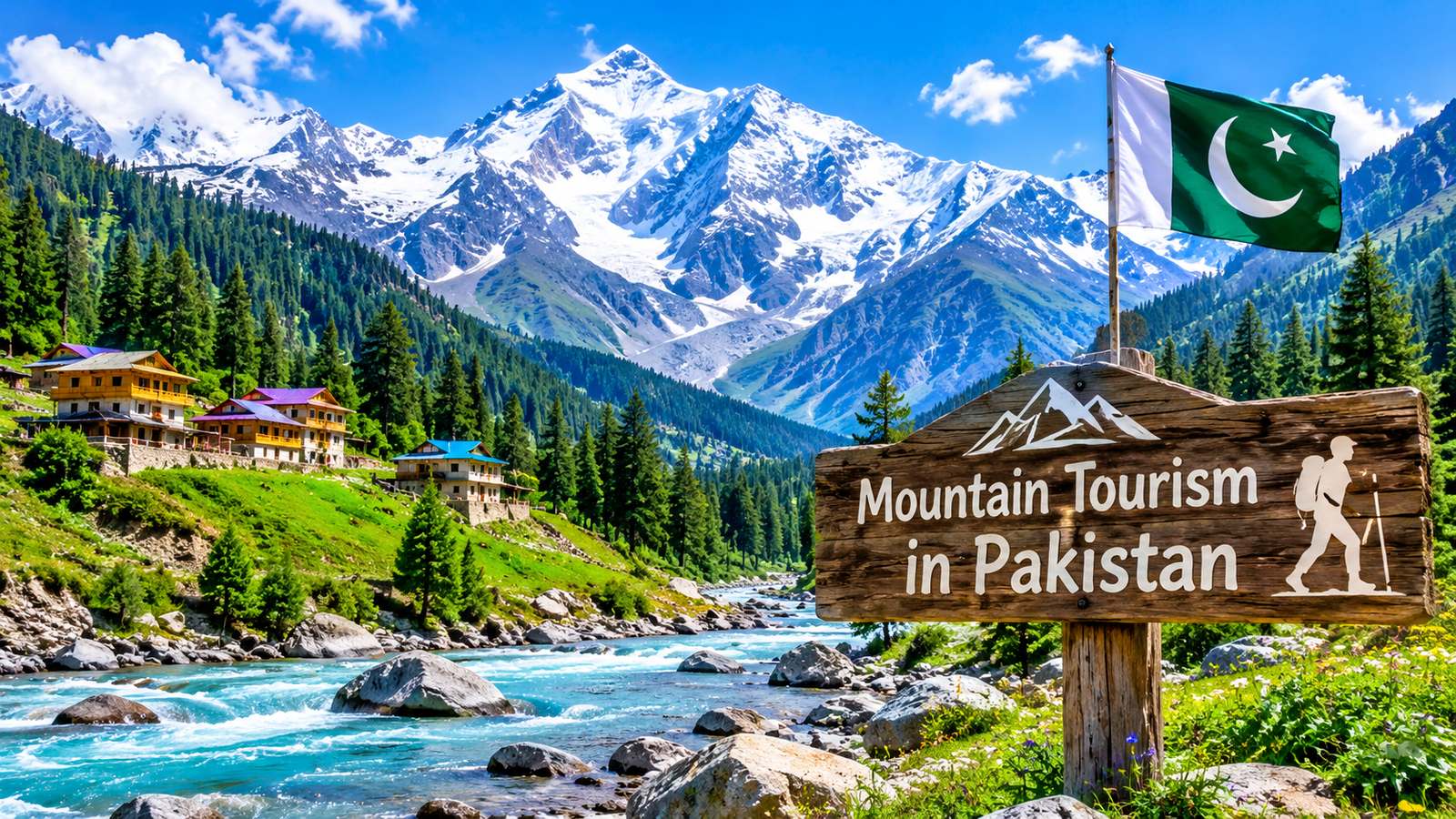

Doodhpathri Kashmir Tourism A Complete Travel Guide to Kashmir’s Hidden Paradise
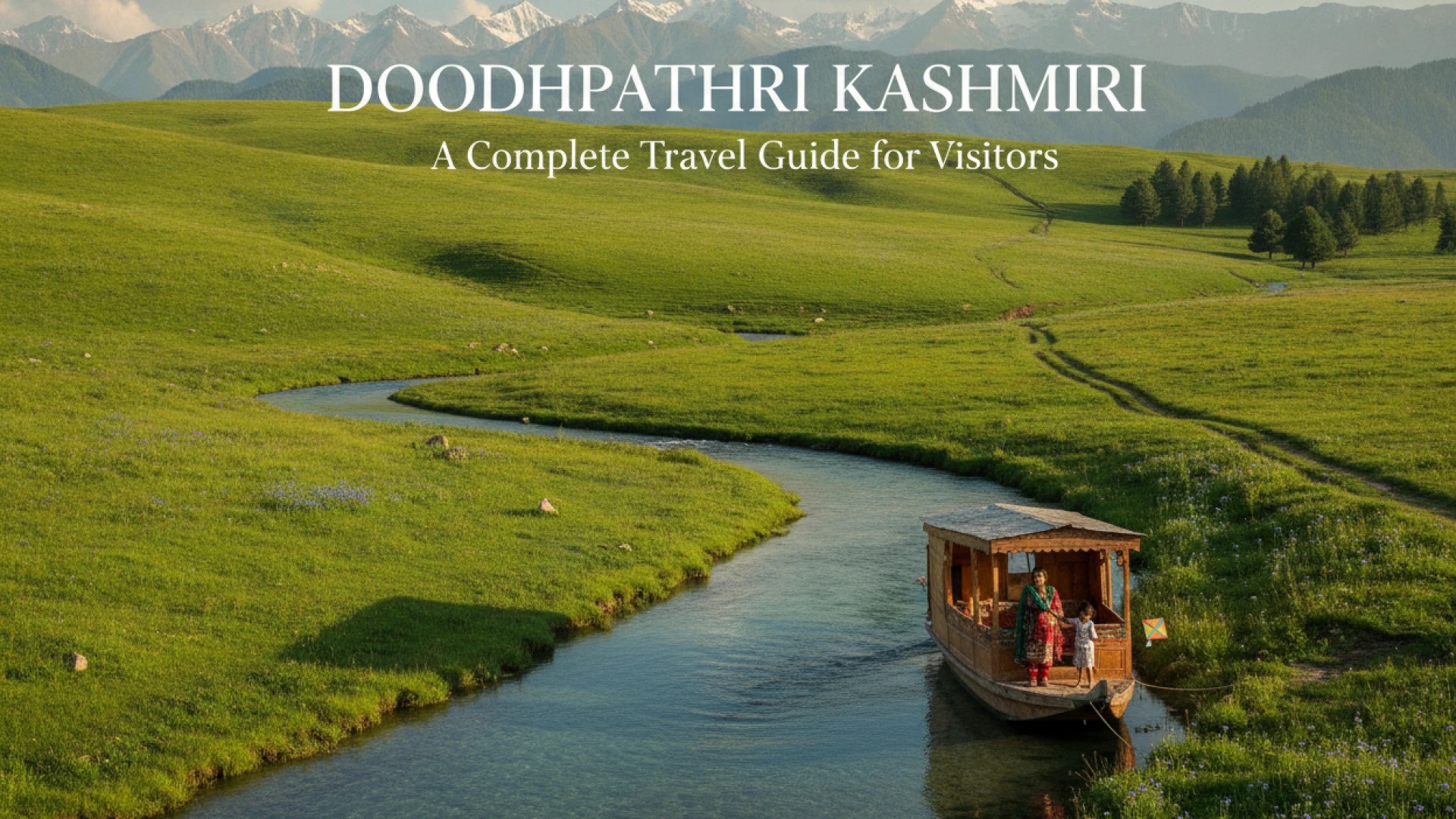
Doodhpathri Kashmir Tourism is a perfect choice for travelers who want to explore the natural beauty of Kashmir. Surrounded by lush green meadows, snow-covered mountains, beautiful rivers, and fresh mountain air, Doodhpathri offers a peaceful escape from busy city life. Whether you love sightseeing, photography, or exploring nature, this beautiful destination promises an unforgettable travel experience.
If you have spent any time planning a trip up north, you have likely stared at glossy photos of Gulmarg’s gondola lines or Pahalgam’s crowded taxi stands and wondered if a quieter Kashmir still exists. It does. Tucked away in the Pir Panjal range, Doodhpathri offers an antidote to that over-commercialized circuit, trading concrete resort strips for vast, rolling carpets of alpine grass and pine-scented air.
Locals call it the “Valley of Milk,” a moniker rooted in a blend of folklore and simple physics. Legend tells of the Kashmiri saint Sheikh Noor-ud-Din Noorani poking the ground in search of water for prayers, only for milk to gush out. In reality, the name makes instant sense the moment you walk down to the Shaliganga or Sukhnag rivers. These fast-flowing, boulder-strewn glacial streams churn with so much kinetic force that the water froths into a violent, milky white.
Sitting at an elevation of roughly 8,957 feet in central Kashmir’s Budgam district, the landscape hits you with high-altitude terrain that requires a little forethought:
Gentle plateaus
The main bowl features rolling meadows accessible to most fitness levels, ideal for day walks without technical gear.
River descents
Reaching the actual riverbed involves steep, muddy banks that get slick fast after an afternoon drizzle—skip the flat sneakers and wear boots with grip.
Thin air
You will feel the altitude if you run up the knolls on day one; take it slow to avoid mild altitude headaches.
Over the past few seasons, Doodhpathri Kashmir tourism has shifted from an insider day-trip for Srinagar locals into a legitimate stop on broader itineraries. The Jammu & Kashmir Tourism Development Corporation (JKTDC) has stepped in with paved approach roads, basic tourist reception centers, and regulated pony rates. You still will not find five-star luxury chains or buzzing nightlife here—and honestly, that absence is precisely why you should go. In this guide, you will learn how to navigate the logistical quirks, plan your transit, and sidestep the common visitor traps.
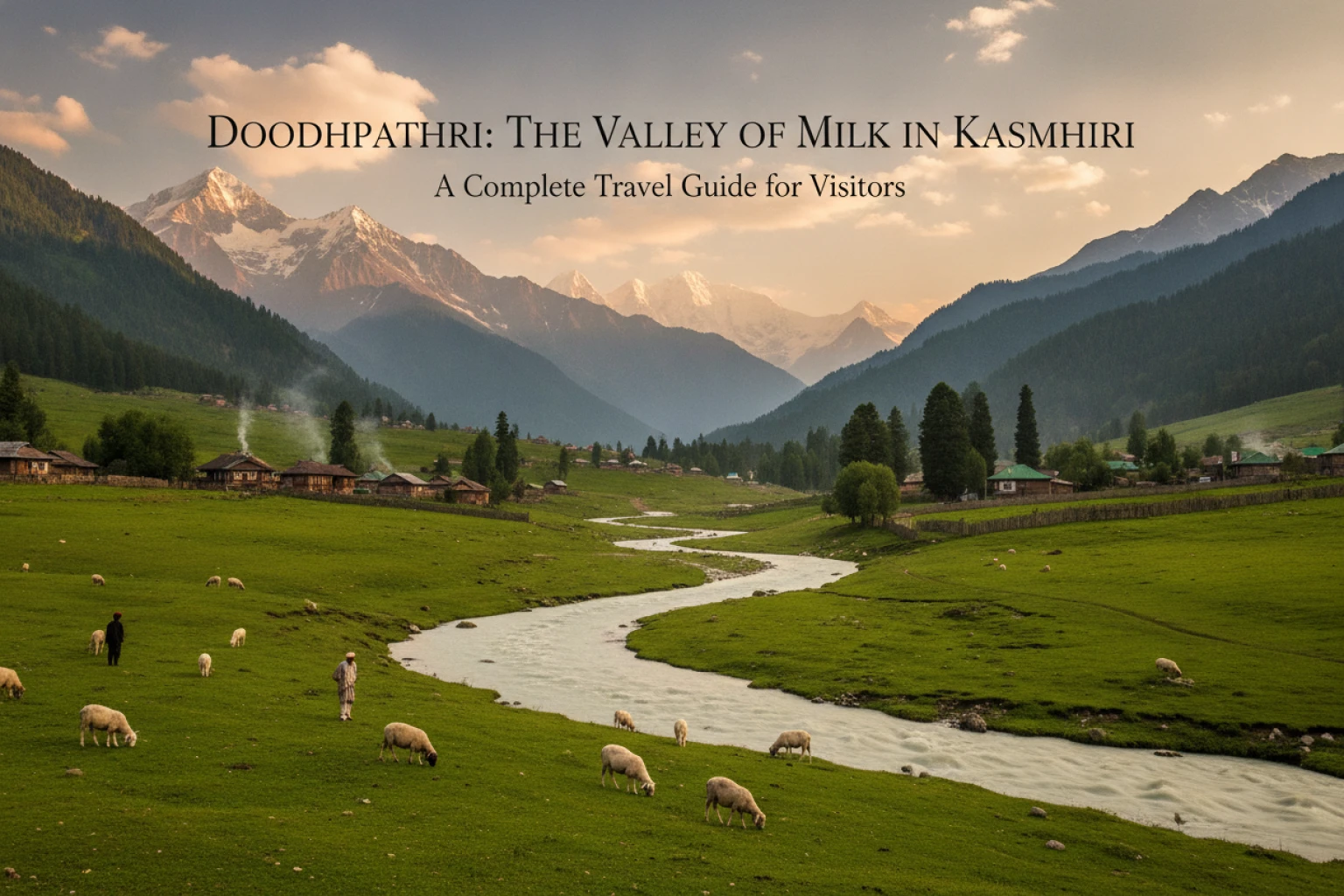
Best Time to Visit Doodhpathri for Snow, Lush Meadows, and Good Weather
Unlike Gulmarg or Pahalgam, timing your trip to Doodhpathri makes or breaks the experience because tourist infrastructure here is still minimal. Picking the right month comes down to whether you want soft green expanses or deep, quiet snowfields.
The sweet spot for green valleys runs from mid-April through June. Winter snow melts fast by late spring, giving way to rolling pastures, patches of yellow buttercups, and daytime temperatures hovering comfortably between 15°C and 22°C. Walking down to the Shaliganga River feels effortless, and local shepherd huts (kothas) begin to open up. If your idea of Doodhpathri Kashmir tourism involves sprawling on the grass without wearing four layers, this is your window.
From December to February, the valley does a complete 180. Snow settles thick across the meadows, the Shaliganga fringes turn to ice, and day-trippers drop drastically. It is a fantastic stretch for raw snow-trekking and sledging, but be realistic: you will need a 4×4 or chained tyres beyond Khan Sahib after heavy snowfall, and you won’t find heated cafes waiting for you at the top. Pack your own hot thermos and head back toward Srinagar before 4 PM when sub-zero winds kick in.
July and August bring sporadic monsoon showers. The valley looks dramatic, but the dirt tracks turn into slick muck. Don’t skip it entirely, but carry waterproof hiking boots and a solid shell jacket—valley rain brings sudden, sharp temperature dips that catch unprepared travelers off guard.
Month-by-Month Snapshot
January – February
Deep snow, icy roads requiring chains, minimal crowds; best for winter walks and isolation.
March – April
Thawing landscapes, clear tarmac, light crowds; great for budget travel before peak season.
May – June
Lush turf, peak weather, higher footfall; ideal for family picnics and river strolls.
July – August
Muddy trails, humid interludes, low crowd density; suited for slow travel if you pack rain gear.
September – October
Crisp air, golden grass, empty roads; perfect for landscape photographers.
November – December
First dusting of snow, biting cold, freezing winds; day trips only.
 Doodhpathri Kashmir Tourism Best Time to Visit for Snow, Lush Meadows, and Pleasant Weather
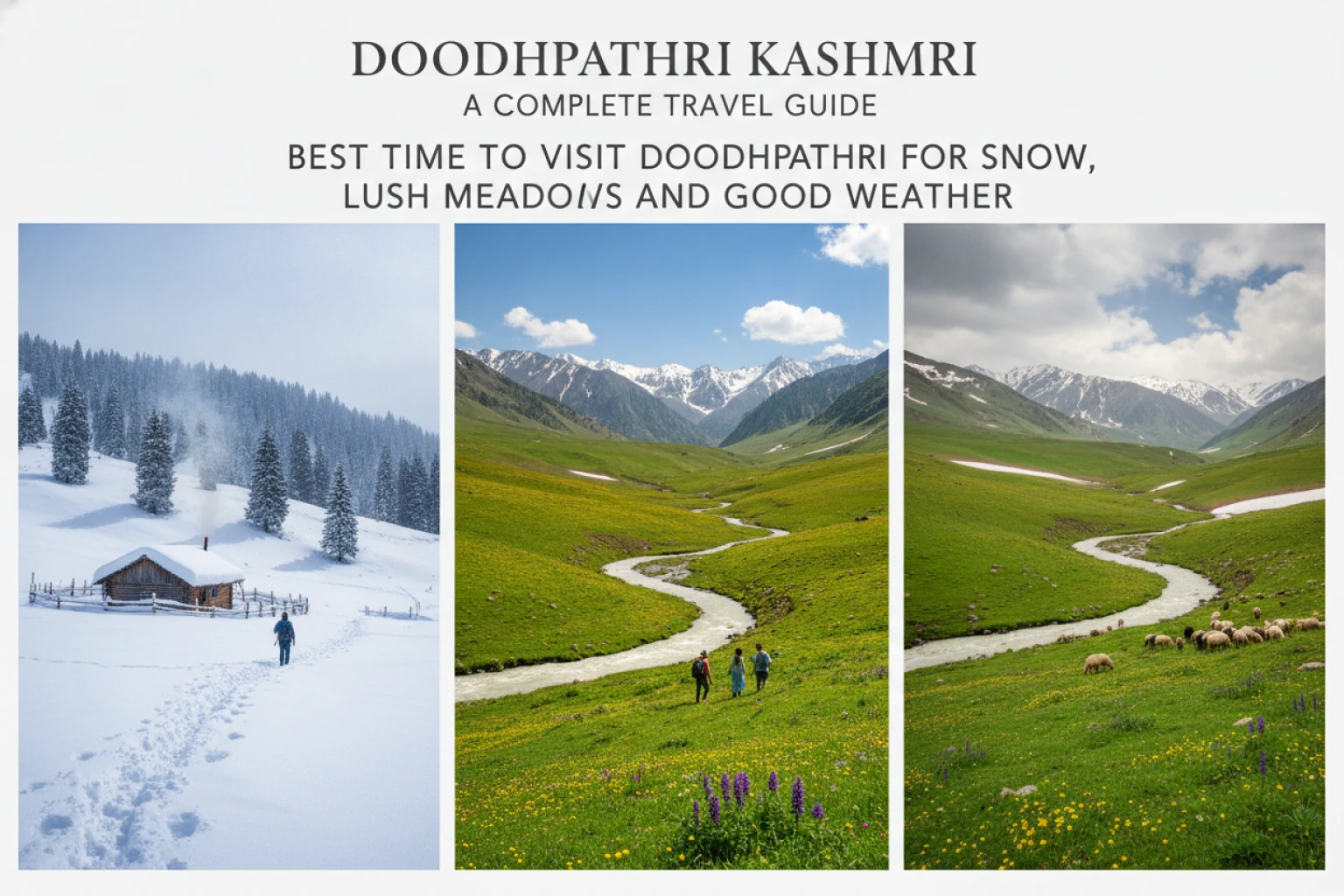 Doodhpathri Kashmir Tourism Best Time to Visit for Snow, Lush Meadows, and Pleasant Weather
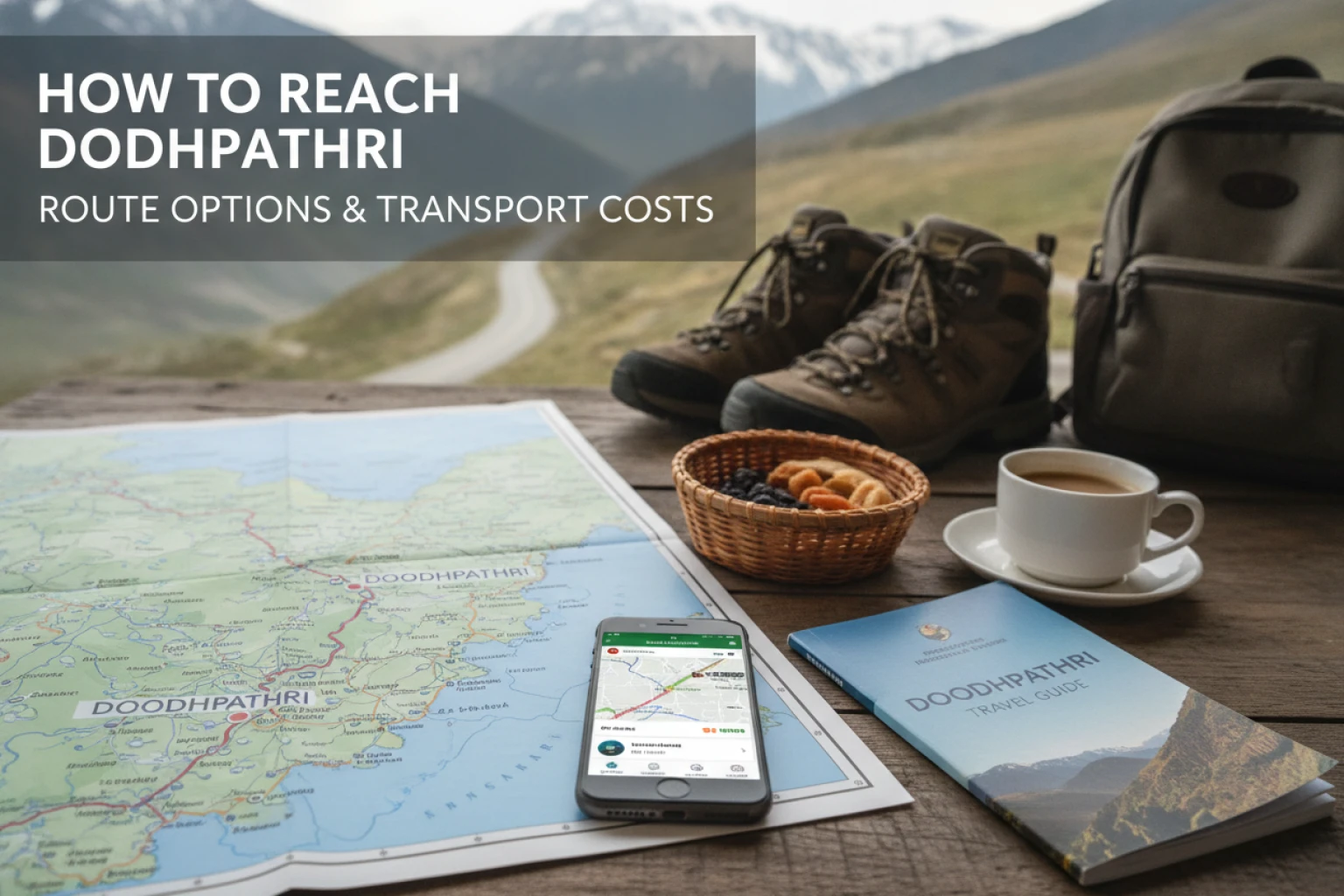
Reaching this alpine valley is straightforward, but mountain driving in Kashmir always demands a bit of planning. The standard route runs from Srinagar through Magam, Beerwah, and Khansahib, covering roughly 42 to 45 kilometers. Under normal summer conditions, expect the drive to take just under two hours.
Getting there breaks down into three distinct transit choices:
Private union taxis
The most reliable option. Srinagar taxi union rates for a same-day round trip typically sit between ₹2,200 and ₹3,000 depending on the vehicle class (hatchback vs. Innova). Always confirm whether waiting charges are included before you leave the stand.
Shared sumo cabs
Budget-friendly but slow. You will have to switch vehicles twice—first at Magam, then again at Khansahib—before catching a final seat up to the meadow. It costs under ₹200 per head, yet it eats half your day in transfers.
Self-drive cars and rentals
Entirely viable if you have mountain experience, though low-clearance sedans will struggle after heavy rainfall.
The tarmac holds up well through the central plains of Budgam, but the character of the road changes drastically once you clear Khansahib. The final 10-kilometer ascent toward the main bowl introduces narrow single lanes, blind hairpin curves, and occasional gravel patches where spring snowmelt has cut across the asphalt. If you get stuck behind a local tractor or livestock herd here, stay patient—passing on these shoulders is a bad idea.
As you near the valley floor, you will hit the local development authority checkpoint. Personal and commercial vehicles pay an entry fee (usually around ₹50 to ₹100), and officers will log your trip. Drive past the barrier straight to the designated metalled parking lot near the TRC huts. Avoid parking on the open turf shoulders along the riverbank; the soil looks deceptively solid, but the underlying marsh has swallowed plenty of tires.
Top Things to Do in Doodhpathri From Shaliganga River to Parhrez Maidan
Most day-trippers never venture beyond the main parking lot, but taking an extra hour to explore the fringes changes your entire experience of Doodhpathri Kashmir tourism.
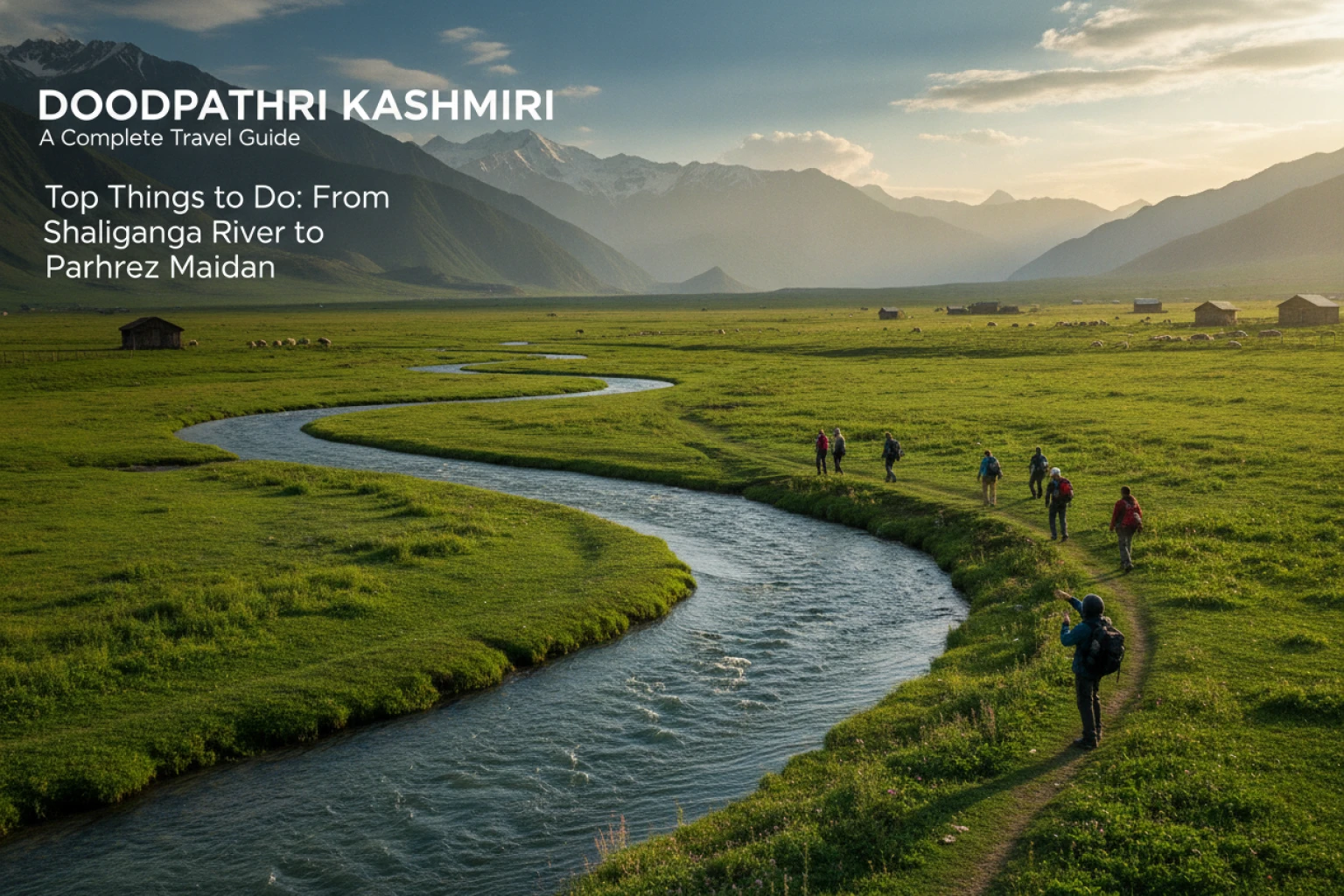
Start by heading down to the boulder-strewn banks of the Shaliganga River. The glacial runoff moves fast here, frothing white over dark granite slabs—the origin of the valley’s “Valley of Milk” nickname. For photography, cross the makeshift wooden footbridges near the river bend roughly 400 meters south of the main entry; the morning light cuts through the mist right into the gorge. Watch your footing on the wet slate, and keep children well back from the waterline during early summer when snowmelt turns the current deceptively violent.
If the riverbanks get crowded with school picnics, climb toward Parhrez Maidan. This vast, rolling meadow sits slightly elevated above the central valley, framed by dense walls of deodar and kail pine. It offers genuine silence. Pitching a tent here requires permission from the local forest outpost, but for an afternoon sprawled out with a thermos of noon chai, there is no better vantage point for unobstructed mountain views.
Serious hikers can push past Parhrez toward the backcountry routes leading toward Dikshal and the base of Mount Tatakoti. This trail transitions quickly from soft turf to loose scree and shepherd trails used by the Gujjar and Bakarwal communities. Do not attempt this ridgeline trek without an offline GPS map and sturdy boots; cloud cover rolls in fast past 2:00 PM, wiping out visual markers across the high passes.
To navigate the terrain comfortably, you might consider hiring a horse. Keep these practical rules in mind:
Insist on the official rate card
The Budgam district administration fixes pre-paid pony rates for specific circuits (like the Shaliganga loop or Parhrez trip). Look for the printed board near the taxi stand before you talk to handlers.
Agree on waiting time upfront
Handlers often quote a flat point-to-point fare, then demand extra cash while you sit by the river. Settle the duration before mounting.
Doodhpathri Kashmir tourism Recommended 1-Day Itinerary and What to Pack
Planning a day trip here requires working around shifting mountain weather rather than sticking to a rigid tour schedule. If you want the most out of Doodhpathri Kashmir tourism without feeling rushed, leave Srinagar early and plan to be off the mountain before the afternoon chill sets in.
The Realistic Hourly Flow
08:00 AM – Wheels Up from Srinagar
Take the route via Budgam and Khansahib (roughly 42 km). The road winds upward quickly once you cross the lower agricultural plains.
10:00 AM – Arrival at Parhzeen
The meadows open up dramatically here. Skip the aggressive pony touts at the main entrance barrier; walk down toward the Shaliganga River instead.
12:30 PM – Riverbanks and Lunch
Settle along the rocky shores of the river or head further into the pine-fringed bowl of Dikbal.
02:30 PM – Hike toward Tatakooti Views
Explore the upper trails while the light is high. Cloud cover builds rapidly after 3 PM.
04:30 PM – Head Downward
Start the drive back to reach Srinagar well before twilight thickens on the narrow switchbacks.
For food, you face a trade-off. Bringing a portable packed lunch from your hotel saves precious daylight, but stopping at the tin-roof dhabas near the entry gate has its perks. A steaming cup of salted Noon Chai paired with local tsochwor bread or hot rajma-chawal beats cold sandwiches when the valley breeze cuts through your jacket.
The Non-Negotiables to Pack
Leave the white sneakers at the hotel. Melting snow patches and marshy river turf demand waterproof trekking shoes with deep tread.
A windbreaker is mandatory even in mid-July; temperatures drop ten degrees the moment a shadow hits the clearing. Pack a fully charged high-capacity power bank and enough physical cash to cover cab fares, tea stalls, and snacks. Mobile towers drop out quickly, rendering UPI and card machines completely useless past Khansahib.
A quick tip on the climb: You jump from Srinagar’s 1,585 meters to nearly 2,730 meters in just two hours. If you are prone to motion sickness or rapid pressure headaches, skip the heavy fried breakfast in town, crack your car window open for fresh air rather than blasting the AC, and sip warm ginger tea or Kahwa on the ascent.
Essential Visitor Details: Permissions, Local Guidelines, and Safe Travel Planning
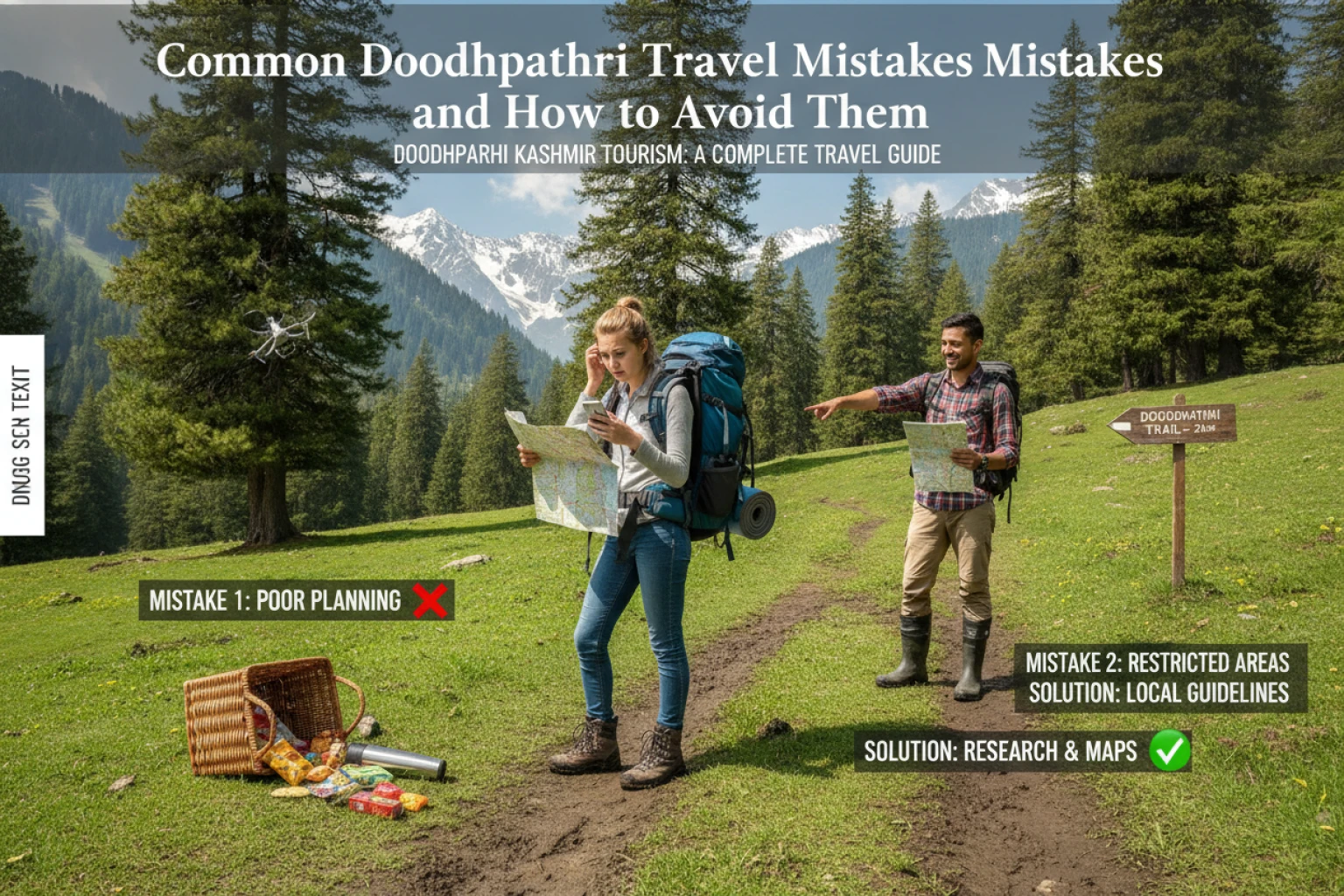
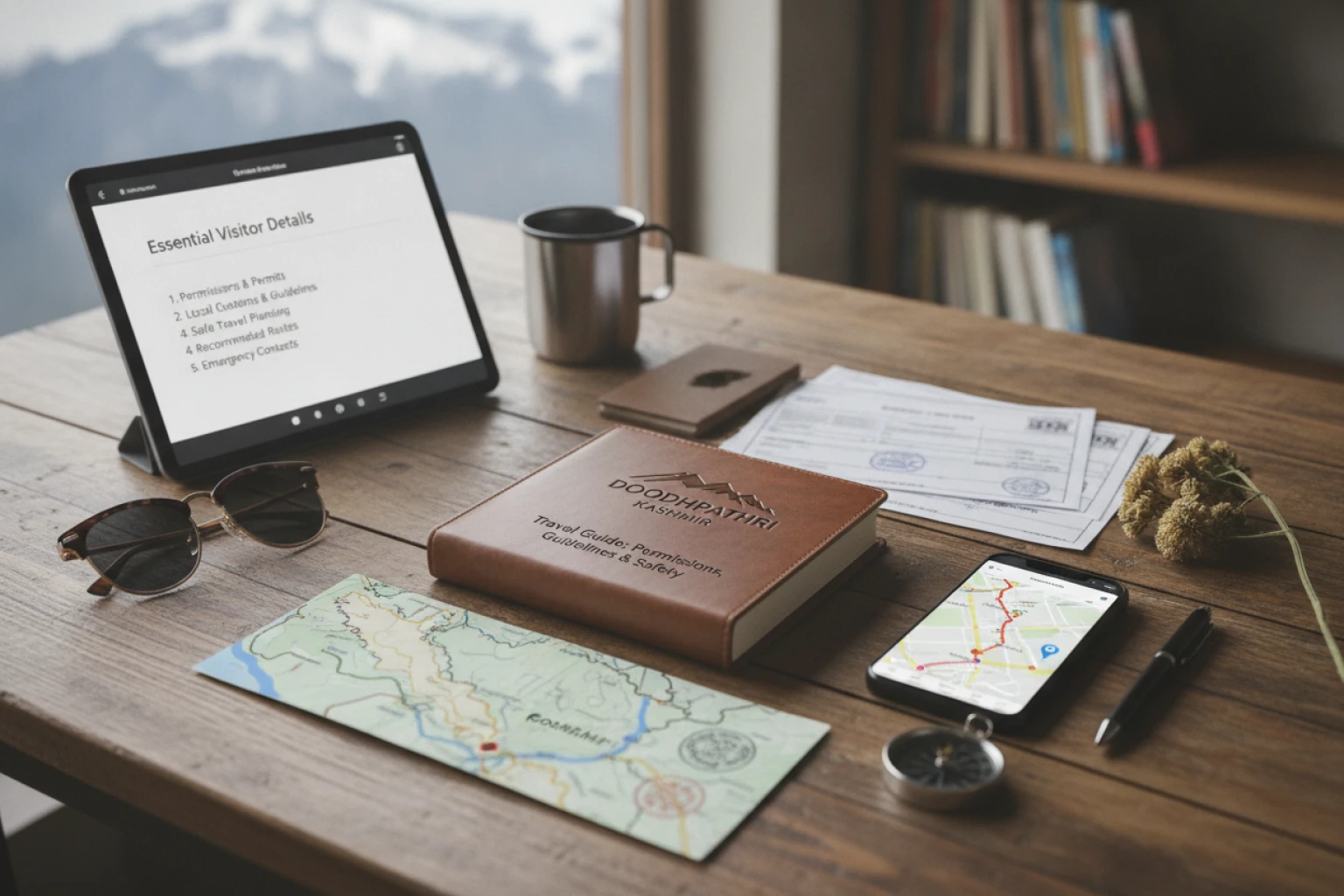
Planning a day trip to the “Valley of Milk” is relatively straightforward, but assuming it runs on the same infrastructure as Gulmarg or Pahalgam is a mistake. As Doodhpathri Kashmir tourism expands, the Budgam district administration has introduced tighter checks to protect the fragile alpine meadows.
Indian nationals do not require an Inner Line Permit. Foreign travelers simply register their passport details at the police checkpoint near the entrance. You will encounter a modest environmental green fee along with standard vehicle parking charges—usually between ₹50 and ₹100 depending on whether you arrive by cab or private car. Keep paper cash handy; mobile networks fluctuate wildly near the Shaliganga riverbed, and digital UPI payments fail constantly here.
Safety protocols from the Jammu & Kashmir Tourism Board (JKTDC) and local authorities focus heavily on the weather. Mountain storms roll over the Pir Panjal range with little warning. If the local police post (Budgam PCR: 01951-255207) flags an incoming flash-flood advisory, stay well clear of the riverbanks and low-lying gravel banks.
Emergency logistics require upfront realism:
First aid
The nearest basic healthcare dispensary is in Khansahib, about 15 kilometers down the winding road.
Critical care
Serious altitude sickness, fractures, or major emergencies require transport to District Hospital Budgam or tertiary facilities in Srinagar, at least 90 minutes away. Travel with personal prescriptions and basic acute medication.
Finally, practice conscious tourism. Rather than booking prepaid pony packages through middleman agencies in Srinagar, hire the local Gujjar and Bakarwal horsemen on-site. Agree on destinations and rates clearly before setting off. It puts money directly into the pockets of high-altitude pastoral communities whose seasonal livelihoods depend on these pastures, keeping your mountain journey ethical and hassle-free.
FAQS
Can you visit Doodhpathri as a day trip from Srinagar?
Yes, and that is actually how most people experience it. The drive from Lal Chowk takes around two to two-and-a-half hours each way via Budgam and Khansahib. Start by 8:30 AM so you clear the outskirts before school buses and morning traffic choke the narrow town roads. You will get a solid five hours on the meadows and still make it back to Srinagar well before dark.
Is Doodhpathri worth visiting over Gulmarg or Pahalgam?
It depends on what you want from your trip. If you need five-star luxury resorts, bustling markets, or gondola rides, stick to Gulmarg. But if you hate tourist swarms and aggressive vendors, Doodhpathri wins hands down. It is far raw, quieter, and feels like untouched countryside. The trade-off? Tourist infrastructure is basic. You will find small tea stalls and basic dhabas serving rajma chawal or maggi, but no fine dining.
Do you need to hire a pony to explore the meadows?
Local horse handlers will insist you cannot walk to the Shaliganga river or Dikbal meadow, but that is simply not true. If you have average fitness, walking is the better option. The main paths are gentle, and walking saves you from haggling. Hire a pony only if you are traveling with elderly parents, small kids, or want to trek higher up into the rougher trails toward Ashtar. Always negotiate and fix the rate clearly before putting a foot in the stirrup.
Is Doodhpathri Kashmir tourism open during winter?
The meadows remain accessible for most of the early winter, but heavy snowfall in January and February can temporarily shut the final stretch of road from Raiyar. Unlike Gulmarg, where snow clearance is constant due to the ski season, Doodhpathri can take a couple of days to clear after a severe blizzard. If you are chasing deep snow without the commercial resort crowds, it is fantastic—just carry a sturdy pair of waterproof boots and check road conditions with a local driver in Budgam before heading up.
learn more about this article then vist wikipedia
want to read more article then check this