







Packing list for winter trip: Your Ultimate Guide
Embarking on a winter adventure promises breathtaking landscapes and unique experiences. However, the success and enjoyment of your trip largely hinge on proper preparation. A well-thought-out packing list for winter trip ensures comfort, safety, and warmth. Consequently, you will enjoy your journey, regardless of the destination. This comprehensive guide equips you with essential knowledge. Specifically, it helps you pack effectively for any cold-weather escapade, from snowy mountain peaks to charming frosted cities. Therefore, let’s delve into the specifics of what you truly need.
The Essential Packing List for Winter Trip Success
Planning for cold weather requires a strategic approach to clothing and gear. Indeed, the right items make all the difference. This section outlines the fundamental components of any robust packing list for winter trip.
Layering is Key: Apparel Essentials
Layering is the cornerstone of winter dressing. It allows you to adapt to changing temperatures and activity levels. Moreover, it traps warm air close to your body.
- Base Layers (Thermal Underwear):
- Purpose: Wicks moisture away from your skin, keeping you dry.
- Material: Merino wool or synthetic fabrics (polyester). Avoid cotton, as it absorbs moisture and stays wet, making you cold.
- Recommendation: Pack at least two sets. One for daytime activities and another for sleeping or backup.
- Mid Layers (Insulation):
- Purpose: Provides warmth.
- Material: Fleece jackets, down vests, or lightweight synthetic puff jackets.
- Recommendation: A medium-weight fleece is versatile. A down vest adds extra core warmth without bulk.
- Outer Layers (Shell):packing list for winter trip
- Purpose: Protects against wind, snow, and rain.
- Material: Waterproof and windproof jacket and pants (e.g., Gore-Tex or similar technical fabrics).
- Recommendation: Ensure your outer shell is breathable. This prevents overheating during physical activity.
- Headwear, Handwear, and Footwear:
- Hats: A warm, insulated hat is crucial. Much body heat escapes from your head. Consider a balaclava for extreme cold.
- Gloves/Mittens: Waterproof and insulated gloves are indispensable. Mittens generally offer more warmth than gloves. However, gloves provide better dexterity.
- Socks: Several pairs of wool or synthetic blend socks are vital. These wick moisture and provide insulation. Avoid cotton socks.
- Boots: Waterproof, insulated winter boots with good traction are a must. Ensure they are comfortable for walking. Furthermore, check they accommodate thick socks.packing list for winter trip
Personal Items and Toiletries
Even in cold climates, personal care remains important. Additionally, winter conditions can be harsh on skin and lips.
- Sunscreen and Lip Balm: Snow reflects UV rays, increasing sun exposure. Therefore, high SPF sunscreen and lip balm with SPF are essential.
- Moisturizer: Cold, dry air can chap skin. A good quality moisturizer is beneficial.
- Medications: Bring any prescription medications. Also, consider over-the-counter pain relievers, cold remedies, and any personal first aid items.
- Basic Toiletries: Toothbrush, toothpaste, shampoo, conditioner, and soap. Opt for travel-sized containers to save space.
Health and Safety Gear
Safety should always be a priority. This is especially true in challenging winter environments.
- First-Aid Kit: A compact kit with bandages, antiseptic wipes, pain relievers, and any personal medications.
- Headlamp/Flashlight: Crucial for navigating in low light or emergencies. Pack extra batteries, as cold temperatures drain them faster.
- Navigation Tools: A map, compass, or GPS device. Know how to use them.
- Multi-tool: Useful for various minor repairs or tasks.
- Emergency Blanket: A lightweight, reflective blanket can be life-saving in unexpected situations.
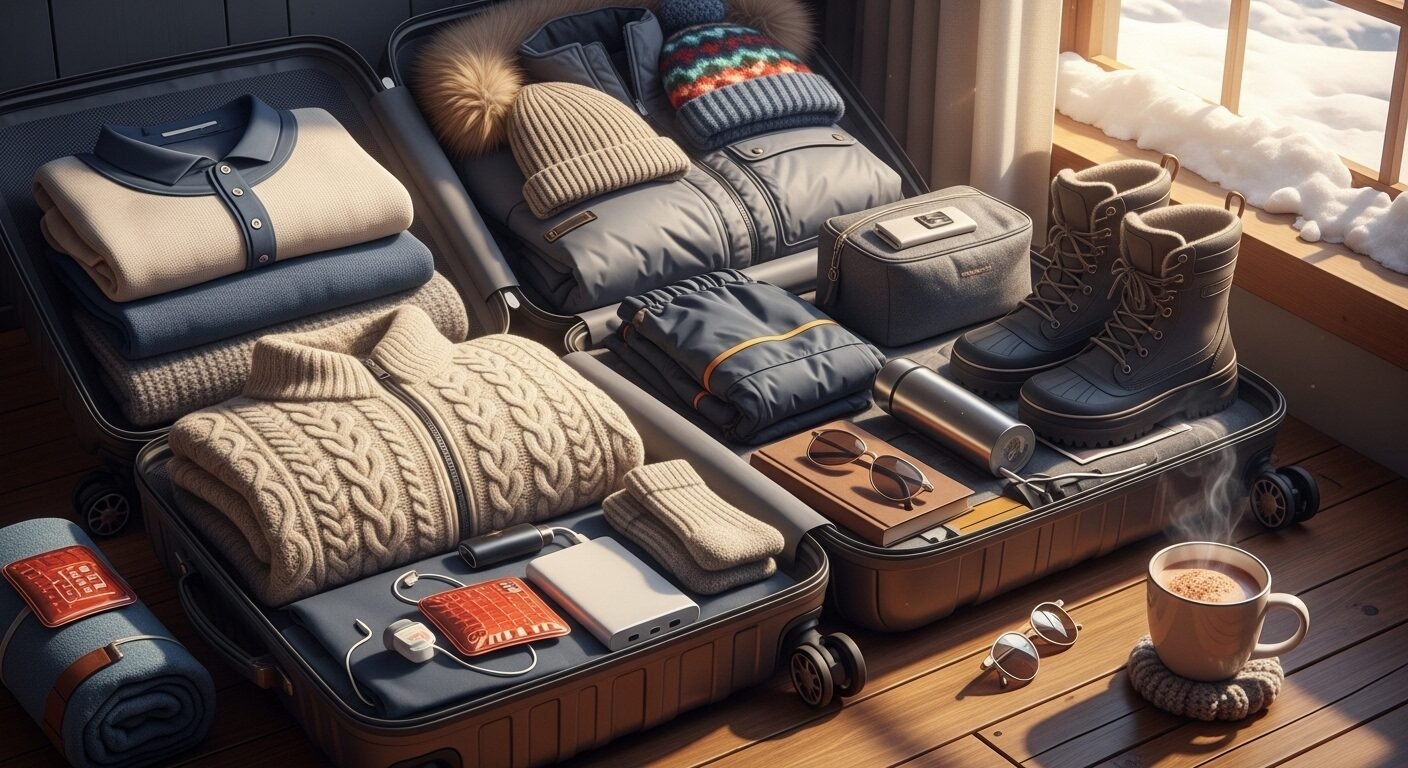
Packing list for winter trip: Your Ultimate Guide becomes easier when you focus on warmth, comfort, and practicality. Start by choosing the right layers—thermal base wear, insulated jackets, waterproof outerwear, and warm accessories like gloves, scarves, and beanies. These essentials help you adapt to changing temperatures without feeling weighed down. It also helps to pack moisture-wicking socks, sturdy winter boots, and a compact first-aid kit. When you build a smart clothing system, you stay warm while keeping your luggage manageable.
Next, add travel-friendly items that make your winter trip smoother. Bring portable hand warmers,packing list for winter trip a power bank, lip balm, moisturiser, and a reusable water bottle to stay hydrated despite the cold. For snowy destinations, pack sunglasses to reduce glare and a small waterproof bag to protect documents and electronics. Don’t forget your travel essentials like chargers, toiletries, and any personal medications. With a well-planned winter packing list, you stay comfortable, organised, and ready for all your cold-weather adventures.
Electronics and Entertainment
Modern travel often includes electronics. Nevertheless, special considerations apply to winter trips.
- Portable Charger/Power Bank: Cold weather significantly reduces battery life. A power bank is invaluable.
- Camera and Extra Batteries: Capture stunning winter scenery. However, keep spare batteries warm in an inside pocket.
- Offline Entertainment: Books, e-readers, or downloaded movies. These are perfect for downtime or travel delays.
- Adapters/Converters: If traveling internationally, ensure you have the correct power adapters.
Travel Documents and Money
These non-negotiable items ensure smooth passage. Moreover, they are essential for managing your finances.
- Identification: Passport, driver’s license, or other valid ID.
- Tickets and Reservations: Printouts or digital copies of flights, accommodation, and tour bookings.
- Credit/Debit Cards and Local Currency: Inform your bank of your travel plans. Carry some local cash for small purchases.
Specific Considerations for Different Winter Destinations
The ideal packing list for winter trip varies greatly by destination. Consequently, tailor your gear to your specific activities.
Ski Resorts and Mountain Adventures
High-altitude and snow sports demand specialized equipment.
- Ski/Snowboard Gear: Skis, boots, poles, snowboard, or bindings. Consider renting at your destination to save luggage space.
- Goggles: Protect your eyes from sun, wind, and snow.
- Helmet: Essential for safety on the slopes.
- Avalanche Safety Gear: For backcountry skiing or snowboarding, a beacon, shovel, and probe are critical. Furthermore, ensure you have proper training.packing list for winter trip
City Breaks in Cold Climates
Urban exploration in winter requires warmth without sacrificing style.
- Stylish yet Warm Outerwear: A fashionable wool coat or insulated parka.
- Comfortable Walking Boots: Waterproof boots with good grip.
- Layers: Still important, but perhaps lighter mid-layers.
- Umbrella: Unexpected rain or sleet can occur.
Extreme Cold Expeditions
For Arctic or Antarctic regions, preparation is paramount.
- Heavier Duty Insulation: Expedition-grade parkas and pants.
- Chemical Hand/Foot Warmers: Provide instant heat in frigid conditions.
- Specialized Extreme Weather Gear: Such as glacier glasses, heavy-duty gaiters, and insulated over-mitts.
- Satellite Phone/Emergency Beacon: For remote areas, communication devices are vital.
Smart Packing Strategies
Efficient packing makes travel easier. Additionally, it can save you money on baggage fees.
Roll vs. Fold: Maximizing Space
Many travelers debate rolling versus folding. Rolling clothes tightly can save space and reduce wrinkles. Conversely, folding works well for structured garments. Experiment to find what suits you.packing list for winter trip
Use Packing Cubes
Packing cubes are game-changers. They organize your clothing and compress items. This makes finding specific items much easier. Furthermore, they help separate clean from dirty clothes.
Distribute Weight
If traveling with multiple bags, distribute heavy items. This prevents one bag from being overweight. It also makes carrying easier.
Essential Carry-On Items
Always pack essentials in your carry-on bag. This includes medications, important documents, a change of base layers, and valuables. Consequently, you are prepared for lost luggage.
A winter packing list works best when you balance warmth with convenience. Add compact essentials like thermal socks, quick-dry layers, and a lightweight fleece. Include protective items such as sunscreen, as winter sun can still be strong, and a small umbrella for unpredictable weather. packing list for winter trip These extras ensure you stay comfortable and fully prepared throughout your trip.
Pre-Trip Checklist and Final Tips
Before you depart, a final review is always prudent.
Check the Weather Forecast:** Confirm the expected temperatures and precipitation. This allows for last-minute adjustments to your *packing list for winter trip.
- Test Your Gear: Ensure all zippers, buckles, and waterproof coatings are functional.
- Notify Your Bank: Inform them of your travel dates and destinations. This prevents card freezing.
- Travel Insurance: Consider comprehensive travel insurance. It covers unforeseen circumstances, including medical emergencies or lost luggage.
Conclusion
Creating an effective packing list for winter trip is more than just gathering clothes; it’s about strategic planning for comfort, safety, and enjoyment. By focusing on smart layering, selecting appropriate gear for your specific destination, and utilizing efficient packing strategies, you can transform a potentially challenging cold-weather journey into an unforgettable adventure. Ultimately, thoughtful preparation ensures you are ready for whatever beautiful winter throws your way.
Frequently Asked Questions (FAQ)
Q: How many layers should I pack for a winter trip?
A: Generally, the “three-layer system” is recommended: a base layer for moisture-wicking, a mid-layer for insulation, and an outer shell for protection against wind and water. However, for extremely cold conditions or less active trips, you might add an additional insulating layer.
Q: Is it better to roll or fold clothes for winter packing?
A: Both methods have merits. Rolling clothes tightly can save space and reduce wrinkles, especially for softer garments like base layers and mid-layers. Conversely, folding is packing list for winter trip often better for bulkier items like jackets or structured pants. Many travelers use a combination, utilizing packing cubes for organization and compression.
Q: What’s the most important item on a winter packing list?
A: While all items are important, waterproof and insulated winter boots with good traction are arguably the most crucial. Your feet are particularly vulnerable to cold and moisture, and comfortable, dry feet are fundamental to enjoying any winter activity. A warm, waterproof outer jacket is also indispensable.
want to read more Trip Trial about click here
Big Shoutout to the guys who made this blog happen UDM.




Cheap Flights: How to Find the Lowest Airfare Online - Trip Trial
December 9, 2025[…] https://triptrial.info/packing-list-for-winter-trip-your-ultimate-guide/ […]
Unique travel experiences
December 9, 2025[…] https://triptrial.info/packing-list-for-winter-trip-your-ultimate-guide/ […]
Vacation Planning Tips: How to Plan the Perfect Trip Stress-Free - Trip Trial
December 9, 2025[…] https://triptrial.info/packing-list-for-winter-trip-your-ultimate-guide/ […]