




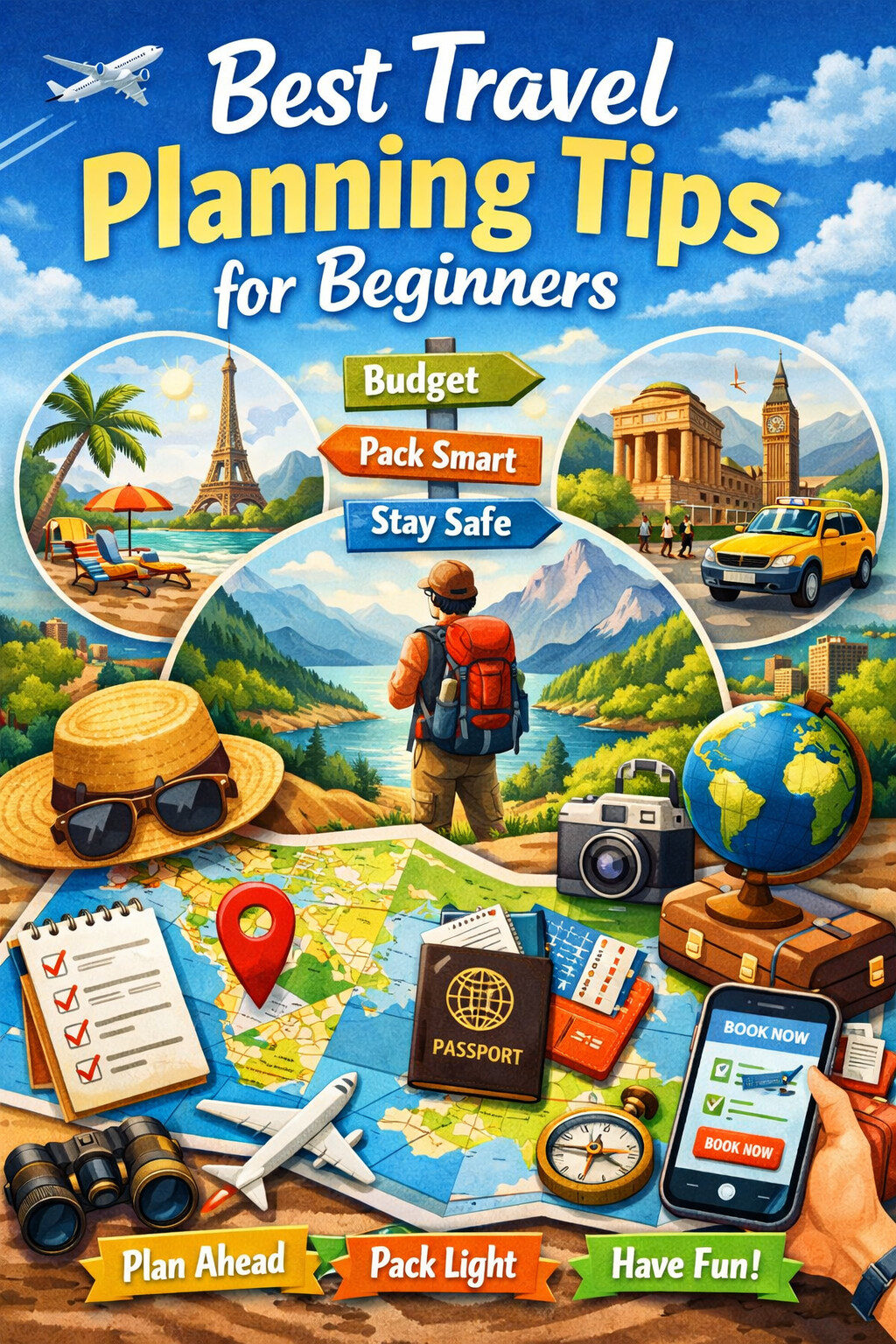
Traveling for the first time can feel exciting and overwhelming at the same time. With so many destinations, bookings, and decisions to make, beginners often don’t know where to start. That’s where proper travel planning makes all the difference. Good planning helps you save money, avoid stress, and enjoy your journey with confidence. In this guide, we’ll share the best travel planning tips for beginners, using simple and practical advice to help you plan a smooth, safe, and memorable trip from start to finish.
Best Travel Planning Tips for Beginners: A Simple Guide to Stress-Free Trips
Traveling for the first time is exciting, but it can also feel confusing and overwhelming. From choosing a destination to booking tickets and packing bags, beginners often don’t know where to start. The good news is that travel planning doesn’t have to be stressful. With the right approach and a few smart tips, anyone can plan a smooth and enjoyable trip.
This guide shares the best travel planning tips for beginners, written in easy words, to help you travel confidently and avoid common mistakes.
Choose the Right Destination
As a beginner, start with destinations that are:
-
Tourist-friendly
-
Safe and well-connected
-
Easy to explore
Avoid places that require complex travel routes or difficult visas. Research destinations that match your budget, interests, and travel style.
Tip: Start with popular cities or countries known for tourism, as they have better transport, accommodation, and support.
2. Decide Your Travel Budget Early
Budget planning is one of the most important steps. Before booking anything, decide:
-
How much you can spend overall
-
How many days you will travel
-
What type of accommodation you prefer
Your budget should include:
-
Flights or transport
-
Hotel or guesthouse
-
Food
-
Local travel
-
Activities
-
Emergency money
Having a clear budget helps you avoid overspending and stress during the trip.
3. Pick the Right Travel Dates
Choosing the right time can save you money and improve your experience.
-
Avoid peak seasons if you want cheaper prices
-
Check weather conditions before finalizing dates
-
Look for off-season or shoulder-season travel
Traveling during less crowded times means cheaper hotels, lower flight prices, and fewer tourists.
4. Research Before You Go
Good research makes travel easier. Beginners should research:
-
Local culture and customs
-
Weather and clothing needs
-
Popular attractions
-
Transportation options
-
Local food
You don’t need to plan every minute, but having basic knowledge helps you feel prepared and confident.
5. Book Flights Smartly
Flight tickets usually take up a big part of your budget.
Tips for beginners:
-
Book early for better prices
-
Compare prices on different websites
-
Be flexible with dates if possible
-
Avoid unnecessary baggage fees
Always double-check your name, dates, and destination before confirming the booking.
6. Choose Beginner-Friendly Accommodation
For your first trips, choose accommodation that is:
-
Centrally located
-
Well-reviewed
-
Safe and clean
Hotels, guesthouses, and serviced apartments are good options for beginners. Reading reviews from other travelers helps you avoid bad experiences.
7. Create a Simple Travel Itinerary
You don’t need a strict schedule. A simple plan works best.
Include:
-
Main places you want to visit
-
Rest time
-
Free time for exploring
Avoid overpacking your days with activities. Travel should be enjoyable, not tiring.
8. Pack Light and Smart
One of the biggest beginner mistakes is overpacking.
Pack only what you need:
-
Comfortable clothes
-
Travel documents
-
Basic medicines
-
Chargers and essentials
Always keep important items like passport, tickets, and money in a secure place.
9. Keep Important Documents Safe
Before traveling:
-
Make copies of passport and ID
-
Save digital copies on your phone or email
-
Note emergency contact numbers
This simple step can save you a lot of trouble if anything is lost.
10. Use Travel Apps and Tools
Technology makes travel easier for beginners.
Helpful travel apps include:
-
Maps and navigation apps
-
Currency converters
-
Hotel and flight booking apps
-
Translation apps
These tools help you move around confidently and save time.
11. Learn Basic Local Etiquette
Every place has its own rules and customs.
Learn:
-
Basic greetings
-
Local manners
-
What is respectful or disrespectful
This shows respect to locals and improves your travel experience.
12. Stay Safe While Traveling
Safety should always come first.
Basic safety tips:
-
Keep valuables hidden
-
Avoid unknown areas at night
-
Follow local laws
-
Trust your instincts
Beginners should stay alert but not scared. Most trips go smoothly with simple precautions.
13. Keep Emergency Money
Always carry:
-
Some cash
-
A backup card if possible
Emergency money helps you handle unexpected situations like delays, lost items, or sudden expenses.
14. Be Flexible and Enjoy the Journey
Things don’t always go as planned — and that’s okay.
-
Flights may delay
-
Weather may change
-
Plans may shift
Stay calm, flexible, and positive. Sometimes unexpected moments become the best travel memories.
15. Learn From Every Trip
Every journey teaches you something new. After your trip:
-
Note what worked well
-
Learn from mistakes
-
Improve your planning for next time
With each trip, travel planning becomes easier and more enjoyable.
Frequently Asked Questions (FAQs)
1. How early should beginners start planning a trip?
Beginners should start planning a trip at least 1–3 months in advance. This gives enough time to research destinations, compare prices, book flights and hotels, and prepare travel documents without stress.
2. What is the biggest travel planning mistake beginners make?
The most common mistake is overplanning or overpacking. Trying to do too much in a short time can cause stress. A simple and flexible plan works best for first-time travelers.
3. How can beginners travel on a budget?
Beginners can save money by:
-
Booking flights early
-
Traveling during off-season
-
Choosing budget accommodation
-
Using public transport
-
Avoiding unnecessary shopping
Planning ahead helps control expenses.
4. Is it safe for beginners to travel alone?
Yes, solo travel can be safe for beginners if they choose tourist-friendly destinations, stay in well-reviewed accommodation, and follow basic safety rules such as staying alert and sharing travel plans with family.
5. What documents should beginners carry while traveling?
Beginners should carry:
-
Passport and visa (if required)
-
Flight and hotel confirmations
-
Travel insurance details
-
ID copies (physical and digital)
Keeping backups is always recommended.
6. How do I choose the best destination as a beginner?
Choose destinations that are safe, easy to navigate, and popular with tourists. Look for places with good transport, clear signage, and plenty of travel information online.
7. Should beginners use travel insurance?
Yes, travel insurance is highly recommended. It protects beginners from unexpected problems such as medical emergencies, trip cancellations, or lost luggage.
8. How much luggage should a beginner traveler pack?
Beginners should pack light and smart. Carry only essentials, comfortable clothes, and basic toiletries. Packing less makes travel easier and more enjoyable.
9. What travel apps are helpful for beginners?
Useful travel apps include:
-
Maps and navigation apps
-
Flight and hotel booking apps
-
Currency converter apps
-
Translation apps
These tools make travel smoother and stress-free.
10. What should beginners do if plans change suddenly?
Stay calm and flexible. Travel rarely goes exactly as planned. Adjust your schedule, look for alternatives, and enjoy the experience. Flexibility is part of great travel.
Conclusion
Travel planning for beginners doesn’t need to be complicated. By choosing the right destination, managing your budget, researching well, and staying flexible, you can enjoy a smooth and memorable journey. Start simple, travel smart, and focus on enjoying the experience rather than stressing over small details.
With these best travel planning tips for beginners, your first trip can be the start of a lifelong love for travel
Want to read more Trip Trial about click here
Big Shoutout to the guys who made this blog happen UDM
- https://triptrial.info/off-season-travel-benefits-smart-choices/
- https://triptrial.info/family-travel-with-kids-tips-your-ultimate-guide/
- https://triptrial.info/best-credit-cards-for-travel-rewards-your-ultimate-guide/
- https://triptrial.info/packing-list-for-winter-trip-your-ultimate-guide/
- https://triptrial.info/caribbean-vacation-tips-your-ultimate-guide-to-a-perfect-tropical-getaway/