







Airport Security Navigation: Your Essential Guide
Navigating airport security can often feel like a daunting part of air travel. However, with the right knowledge and preparation, this process can become significantly smoother and less stressful. This comprehensive guide will demystify airport security navigation. It offers practical advice and insights. These will help you breeze through checkpoints with confidence. Ultimately, understanding the procedures and preparing effectively are crucial for a hassle-free journey.
Understanding the Importance of Efficient Airport Security Navigation
Efficient airport security navigation is not merely about personal convenience. Instead, it is a critical component of global aviation safety. Security protocols are designed to prevent threats and ensure the well-being of all passengers and crew. Therefore, understanding and cooperating with these measures is a shared responsibility. Furthermore, a well-prepared traveler contributes to the overall efficiency of the security line. This benefits everyone. Conversely, delays often stem from passengers who are unaware of the rules or unprepared for the screening process. Consequently, proactive preparation is key.
Before You Go: Pre-Flight Preparation for Security
Preparation begins long before you arrive at the airport. Thoughtful planning can dramatically reduce your time at the security checkpoint.
Checking Prohibited Items Lists
Firstly, review the list of prohibited and restricted items. These lists are specific to your departure country and destination. For instance, in the United States, the Transportation Security Administration (TSA) provides a detailed “What Can I Bring?” tool. Certain items, like liquids over 3.4 ounces (100 ml) in carry-on bags, are universally restricted. Conversely, some items may be allowed in checked luggage but not in carry-ons. Always double-check, as rules can vary slightly between airlines and countries. Ultimately, knowing these regulations prevents unwelcome surprises.
Packing Smartly
Your packing strategy directly impacts your security experience. Consider the following:
- Liquids, Gels, and Aerosols: Adhere to the 3-1-1 rule for carry-on bags. This means 3.4 ounces or 100 milliliters per item. Pack them in a 1-quart-sized bag. Only one bag is allowed per passenger. Place this bag in an easily accessible spot.
- Electronics: Larger electronics, such as laptops, tablets, and cameras, often need to be removed from your bag. They must be placed in a separate bin. Pack them near the top of your carry-on for quick access.
- Jewelry and Valuables: Wear minimal jewelry to avoid removing it at the checkpoint. Place other valuables securely in your carry-on, not in outer pockets.
- Footwear: Choose slip-on shoes if possible. You will likely need to remove them.
By organizing your belongings logically, you facilitate a smoother screening process. Therefore, thoughtful packing is a significant time-saver.
Digital vs. Physical Documents
While digital boarding passes are convenient, having a physical backup is always wise. Furthermore, ensure your ID or passport is easily retrievable. Keep it separate from other items you might need to remove from your pockets. This simple step streamlines the document check.
Navigating the Security Checkpoint: A Step-by-Step Guide
Once at the airport, follow the signs for security. The actual process of airport security navigation involves several distinct stages.
The Document Check
Upon reaching the security line, you will first present your boarding pass and valid photo identification to a security officer. Ensure your name on both documents matches precisely. The officer will verify your identity and direct you to the next stage. This initial verification is quick if your documents are ready.
Divesting Your Belongings
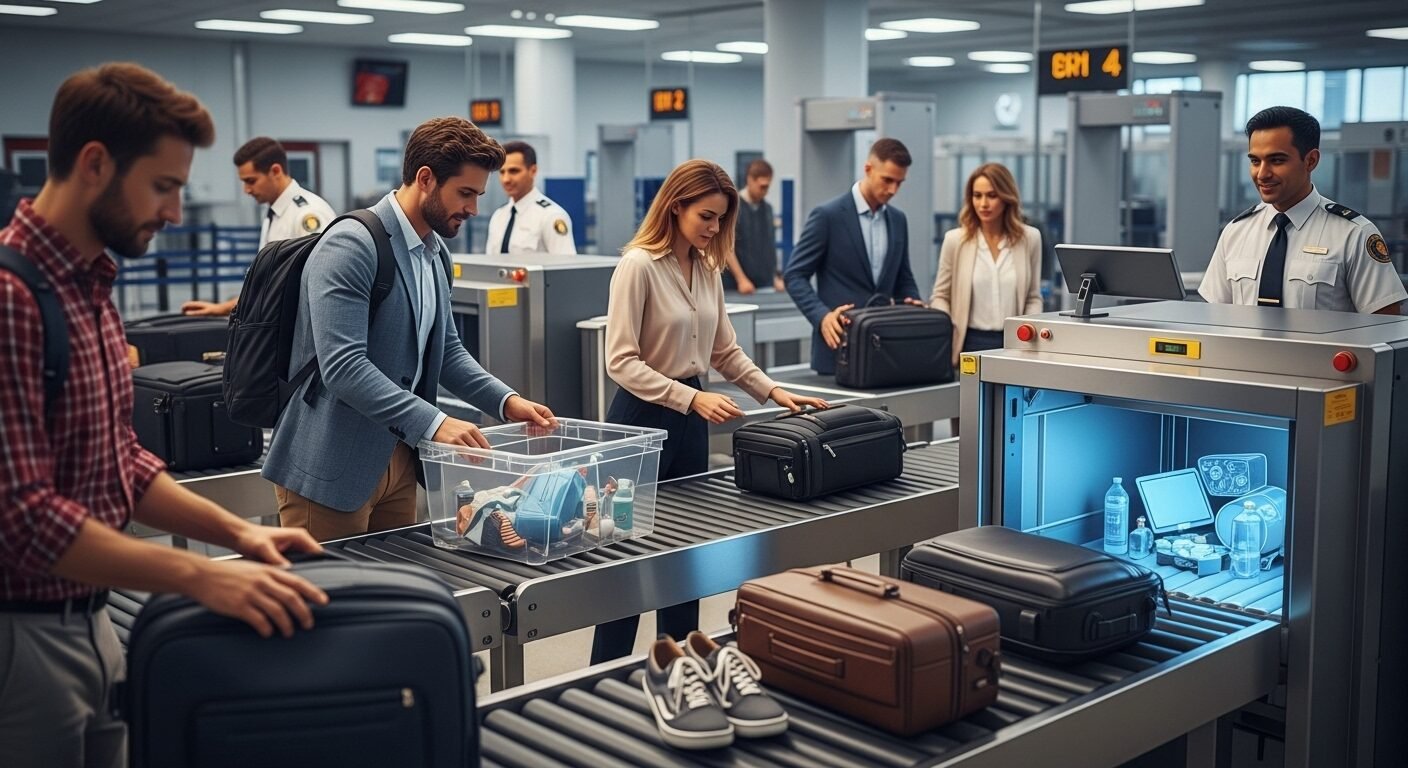
This stage requires you to place items into bins for X-ray screening. Specifically, follow these guidelines:
- Carry-on Bags: Place your carry-on bag(s) flat in a bin.
- Personal Items: Wallets, keys, phones, and other pocket contents should go into a bin.
- Liquids Bag: Your 3-1-1 liquids bag must be removed and placed in its own bin.
- Large Electronics: Laptops, tablets, and other large electronic devices need to be removed from their cases. They must be placed in separate bins.
- Outerwear: Coats, jackets, and sometimes sweaters must be removed and placed in a bin.
- Shoes: Remove your shoes and place them directly on the conveyor belt or in a bin, depending on local procedures.
- Belts: Some airports and security levels require belt removal. Observe what others are doing.
Create an efficient sequence. For example, put your laptop in one bin, your 3-1-1 liquids bag in another, and your shoes in a third. Subsequently, place your carry-on bag and any personal items. This organized approach minimizes fumbling.
The Scanner and Body Scan
After divesting your belongings, you will proceed through either a walk-through metal detector or an advanced imaging technology (AIT) scanner. If you trigger the metal detector, a secondary screening will be required. This is typically a pat-down. AIT scanners create a generic outline of your body to detect anomalies; however, they do not display explicit images. Follow the instructions of the security officers precisely during this step. Raise your arms as directed and stand still.
Retrieving Your Items
Once you clear the scanner, move promptly to the end of the conveyor belt. Collect your belongings there. Re-pack efficiently to avoid congestion. In addition, ensure you have all your items before moving away from the area. This helps maintain flow for other passengers.
Special Considerations for Airport Security Navigation
Certain travel scenarios necessitate specific security navigation strategies.
Traveling with Children and Infants
Traveling with young children requires extra patience and preparation. Strollers, car seats, and baby carriers will typically need to be screened separately. Often, children under a certain age (e.g., 12 in the U.S.) do not need to remove their shoes. Furthermore, breast milk, formula, and juice for infants are exempt from the 3-1-1 liquid rule. However, they may require additional screening. Inform an officer if you are carrying these items. Maintain a calm demeanor, as children often mirror parental anxiety.
Medical Conditions and Equipment
Passengers with medical conditions, disabilities, or who use medical devices (e.g., pacemakers, insulin pumps, mobility aids) should inform a security officer before screening begins. These items may require visual inspection or alternative screening methods. Carry relevant medical documentation, such as a doctor’s note, to facilitate the process. Importantly, your comfort and dignity are priorities during this process.
TSA PreCheck and Other Expedited Programs
Programs like TSA PreCheck (U.S.), NEXUS (U.S./Canada), and Global Entry (U.S.) offer expedited security screening for eligible travelers. These programs typically allow passengers to keep on shoes, belts, and light jackets. They also permit leaving liquids and laptops in their bags. Consequently, they significantly reduce wait times and simplify the security experience. If you travel frequently, investing in such a program can be highly beneficial for your airport security navigation.
Common Pitfalls to Avoid
Even experienced travelers can make mistakes. Avoid these common errors:
- Last-Minute Packing: Rushing leads to forgotten items or improperly packed belongings.
- Ignoring Signage: Airport signs provide crucial information specific to that checkpoint.
- Arguing with Officers: Security personnel are enforcing regulations; cooperation is paramount.
- Forgetting to Declare: Certain items, like firearms or large sums of currency, require declaration.
- Leaving Valuables Unattended: Keep an eye on your bins as they pass through the X-ray machine.
By being mindful of these pitfalls, you can prevent unnecessary delays and stress.
Advanced Tips for a Seamless Experience
To further enhance your airport security navigation:
- Check Wait Times: Many airports and airlines provide real-time security wait times online or via apps. Use this information to plan your arrival.
- Dress Smartly: Avoid overly complicated clothing, excessive jewelry, or items with metal that might trigger detectors.
- Empty Pockets Early: Before you even get to the bins, empty your pockets into your carry-on bag.
- Be Proactive: Observe the line ahead of you. Start preparing your items (removing laptop, liquids, shoes) as you approach the divesting area.
- Use the Right Lane: If available, utilize dedicated lanes for families, those with expedited passes, or those needing extra assistance.
Ultimately, a combination of preparation, awareness, and cooperation ensures the most efficient journey through airport security.
Conclusion
Mastering airport security navigation is an achievable goal for any traveler. By understanding the rules, preparing thoroughly before you leave home, and knowing what to expect at each stage of the checkpoint, you can significantly reduce stress and save time. Remember, security protocols are in place for everyone’s safety. Your cooperation and preparedness contribute to a smoother experience for all. Travel smartly, and enjoy your journey!
Want to read more visit our website
Big Shoutout to the guys who made this blog happen Asim Ali.
Frequently Asked Questions (FAQ)
Q1: What is the 3-1-1 rule for liquids in carry-on bags?
A1: The 3-1-1 rule dictates that liquids, gels, and aerosols in your carry-on must be in containers no larger than 3.4 ounces (100 milliliters) each. All containers must fit comfortably within one transparent, 1-quart-sized bag. Each passenger is allowed one such bag.
Q2: Do I always need to remove my shoes at airport security?
A2: In many countries, including the United States (for standard screening), removing shoes is a standard procedure. However, if you are enrolled in an expedited screening program like TSA PreCheck, or if you are a child under a certain age (e.g., 12 in the U.S.), you may be exempt from removing your shoes. Always observe local signage and officer instructions.
Q3: Can I bring food through airport security?
A3: Generally, solid food items are allowed through airport security. However, liquid or gel-like food items (e.g., yogurt, soup, sauces, creamy dips) must adhere to the 3-1-1 liquid rule for carry-on bags. It is always best to check specific regulations for international travel, as customs rules for food can vary by destination.