




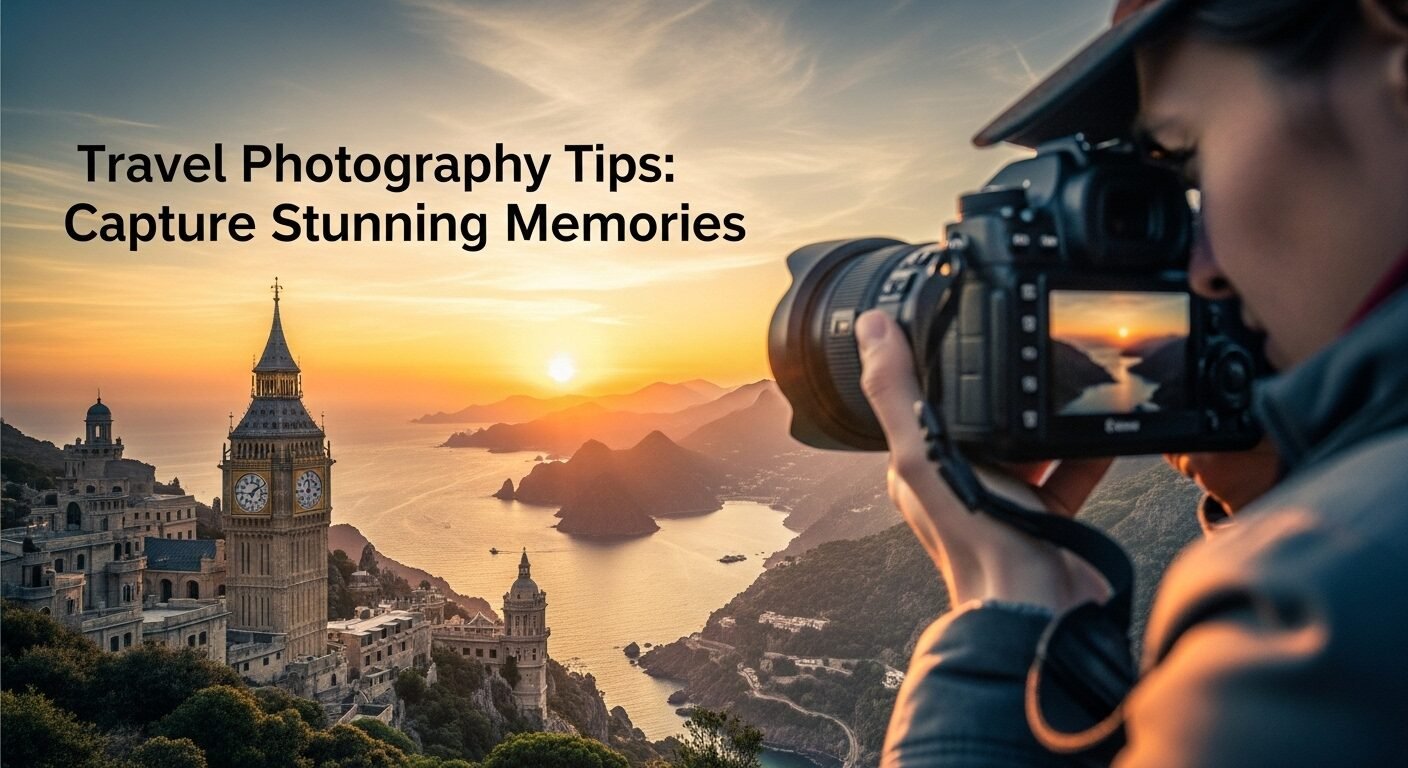
Travel Photography Tips: Capture Stunning Memories
Embarking on a journey offers unique opportunities to create lasting visual memories. However, simply pointing and shooting often falls short of capturing a place’s true essence. Mastering travel photography tips can transform your vacation snapshots into breathtaking works of art. This comprehensive guide will equip you with the knowledge and techniques needed to elevate your travel photography. It ensures every adventure is beautifully documented. We will cover everything from essential gear to advanced compositional strategies and ethical considerations.
Essential Gear for Travel Photography Tips
Choosing the right equipment is crucial for successful travel photography. Your gear should balance capability with portability.
Camera Choices: Finding Your Perfect Match
- DSLRs and Mirrorless Cameras: These offer superior image quality, interchangeable lenses, and manual controls. Mirrorless cameras are often lighter and more compact. Therefore, they are ideal for travel. For example, a full-frame mirrorless camera provides excellent low-light performance.
- Compact Cameras: High-end compacts provide excellent image quality in a small package. They are convenient for casual shooting.
- Smartphone Cameras: Modern smartphones boast impressive capabilities. They are always with you, thus perfect for spontaneous moments. Furthermore, their computational photography features can produce stunning results.
Lenses: Expanding Your Creative Vision
Your choice of lens significantly impacts your photographic style. Consider these options:
- Wide-Angle Lenses (e.g., 16-35mm): These are indispensable for grand landscapes and architectural shots. They allow you to capture expansive scenes.
- Standard Zoom Lenses (e.g., 24-70mm): Versatile and great for general travel, street photography, and portraits. They offer flexibility without constant lens changes.
- Telephoto Lenses (e.g., 70-200mm): Ideal for wildlife, distant subjects, and compressing perspectives. However, they can be heavy.
- Prime Lenses (e.g., 50mm f/1.8): Offer superior sharpness and excellent low-light performance. Their wide apertures create beautiful background blur, perfect for portraits.
Tripods and Stabilizers: Ensuring Sharpness
A sturdy yet lightweight tripod is invaluable. It helps with long exposures, low-light conditions, and self-portraits. Alternatively, a gimbal or monopod can provide stabilization for video or quick shots.
Essential Accessories: Don’t Leave Home Without Them
- Extra Batteries: Power outlets can be scarce. Always carry spares.
- Multiple Memory Cards: You never want to run out of storage.
- Lens Cleaning Kit: Dust and smudges are inevitable. Keep your lenses pristine.
- Filters:
- Polarizing Filter: Reduces glare and enhances sky colors.
- Neutral Density (ND) Filter: Allows for longer exposures in bright light. This creates silky water or blurred motion.
- Weather Protection: A rain cover for your camera can save your gear from unexpected downpours.
Mastering Composition and Lighting: Key Travel Photography Tips
Beyond gear, understanding fundamental photographic principles is paramount. These travel photography tips will dramatically improve your images.
Compositional Techniques: Guiding the Viewer’s Eye
- The Rule of Thirds: Place your subject off-center along imaginary lines or intersections. This creates more dynamic and balanced compositions.
- Leading Lines: Use natural or man-made lines (roads, fences, rivers) to draw the viewer’s eye into the scene. Consequently, the image gains depth.
- Framing: Utilize natural frames like doorways, arches, or tree branches. This adds context and depth to your main subject.
- Symmetry and Patterns: Look for repetitive elements or reflections. These can create visually striking and harmonious images.
- Perspective and Angles: Don’t always shoot from eye level. Get low, climb high, or shoot through objects. Different perspectives offer fresh interpretations.
Harnessing Light: Your Most Powerful Tool
Light is the essence of photography. Learning to work with it is crucial.
- Golden Hour: The hour after sunrise and before sunset offers soft, warm, diffused light. It is ideal for most types of photography.
- Blue Hour: The period just before sunrise or after sunset provides a cool, ambient light. This is perfect for cityscapes and twilight scenes.
- Dealing with Harsh Midday Light: Avoid shooting directly in harsh sunlight if possible. Instead, seek shade, use fill flash, or focus on capturing strong shadows and contrasts. Sometimes, however, harsh light can be used creatively.
Storytelling Through Your Lens: Advanced Travel Photography Tips
Great travel photos tell a story. They evoke emotion and transport the viewer.
Capturing Local Life and Culture
- People: Photographing locals adds authenticity. Always ask for permission first. Use gestures if language is a barrier. Be respectful and patient. Candid shots often capture genuine moments.
- Markets and Street Scenes: These locations teem with activity and color. They offer rich opportunities for storytelling. Focus on interactions and unique details.
- Daily Routines: Observe and document everyday life. This reveals the true character of a place.
Details and Textures: The Small Wonders
Don’t overlook the small stuff. A weathered door, intricate textile, or unique street art can convey a strong sense of place. These details add depth to your overall narrative.
Landscapes with Impact: Beyond the Postcard Shot
While sweeping vistas are beautiful, try to add a unique element. Include a person for scale, a distinct foreground, or an unusual perspective. This transforms a generic landscape into a personal statement.
Food Photography: A Taste of Your Travels
Local cuisine is a huge part of travel. Capture beautifully plated dishes, vibrant market produce, or the cooking process. Use natural light to make food look appetizing.
Night Photography: Embracing the Darkness
- Cityscapes: Long exposures can turn city lights into mesmerizing streaks.
- Starry Skies: Away from light pollution, capture the Milky Way. A wide-angle lens and a tripod are essential here.
Post-Processing for Impact: Refining Your Travel Photography
Editing is where your vision truly comes to life. It enhances your images, making them pop.
Software Essentials: Your Digital Darkroom
- Adobe Lightroom and Photoshop: Industry standards for comprehensive editing.
- Mobile Apps: Snapseed, VSCO, and Lightroom Mobile offer powerful tools on the go.
Basic Adjustments: The Foundation of Editing
- Exposure and Contrast: Correcting these is often the first step.
- White Balance: Ensures accurate colors, reflecting the scene’s original mood.
- Highlights and Shadows: Recovering detail in overexposed or underexposed areas.
Color Grading and Cropping
- Color Grading: Adjusting hues, saturation, and luminance can create a specific mood or style. For instance, warmer tones evoke a sense of nostalgia.
- Cropping and Straightening: Improves composition and corrects horizons. Eliminate distracting elements.
Sharpening and Noise Reduction
These are final touches. Sharpening adds crispness. Meanwhile, noise reduction cleans up grainy images, especially from high ISO shots.
Backup and Storage: Protecting Your Precious Memories
Always back up your photos. Use cloud services, external hard drives, or both. Losing your travel memories would be a significant regret. Therefore, implement a robust backup strategy.
Ethical Travel Photography Tips
Being a responsible photographer is paramount. Your actions reflect on the wider photography community.
Respecting Locals and Culture
- Ask Permission: Especially when photographing individuals. A simple “May I?” or gesture goes a long way.
- Be Mindful of Sacred Sites: Some places prohibit photography. Always respect local rules and customs.
- Avoid Exploitation: Don’t photograph people in vulnerable situations for personal gain. Your subjects are not props.
Minimizing Environmental Impact
- Leave No Trace: Stay on marked paths. Do not disturb wildlife or natural habitats.
- Be Aware of Your Surroundings: Avoid damaging delicate environments while seeking a shot.
By following these comprehensive travel photography tips, you will not only capture stunning images but also create a more meaningful and respectful travel experience.
Conclusion
Mastering travel photography is an ongoing journey, but by applying these travel photography tips, you can significantly enhance your ability to capture the world’s beauty. From selecting the right gear and understanding light to composing compelling shots and processing your images, each step contributes to creating powerful visual narratives. Remember, the most important element is your unique perspective and the stories you choose to tell. Embrace ethical practices, respect local cultures, and let your lens be a window to your incredible adventures.
Frequently Asked Questions (FAQ)
Q: What is the most important piece of gear for travel photography?
A: While a good camera is helpful, the most important “gear” is your eye and understanding of light. However, if we’re talking equipment, a versatile lens (like a 24-70mm equivalent) and extra batteries are crucial. Ultimately, the best camera is the one you have with you and know how to use.
Q: How can I respectfully photograph locals during my travels?
A: Always ask for permission before taking someone’s photo. A simple smile and gesture can often suffice if there’s a language barrier. If they decline, respect their wishes. Focus on candid shots from a distance or engage in conversation first to build rapport.
Q: Is it necessary to edit travel photos?
A: Editing is highly recommended. It allows you to refine your images, correct imperfections, and enhance colors and mood to match your artistic vision. Even basic adjustments can significantly improve a photo. Many powerful editing apps are available for both desktop and mobile devices.
If you’re ready to grow your online presence, don’t hesitate contact UDM Creative today!
Want to get more information and then checkout theselinks.




código binance
November 14, 2025Your point of view caught my eye and was very interesting. Thanks. I have a question for you.
Binance
November 14, 2025Can you be more specific about the content of your article? After reading it, I still have some doubts. Hope you can help me.
Binance
November 14, 2025Can you be more specific about the content of your article? After reading it, I still have some doubts. Hope you can help me.