







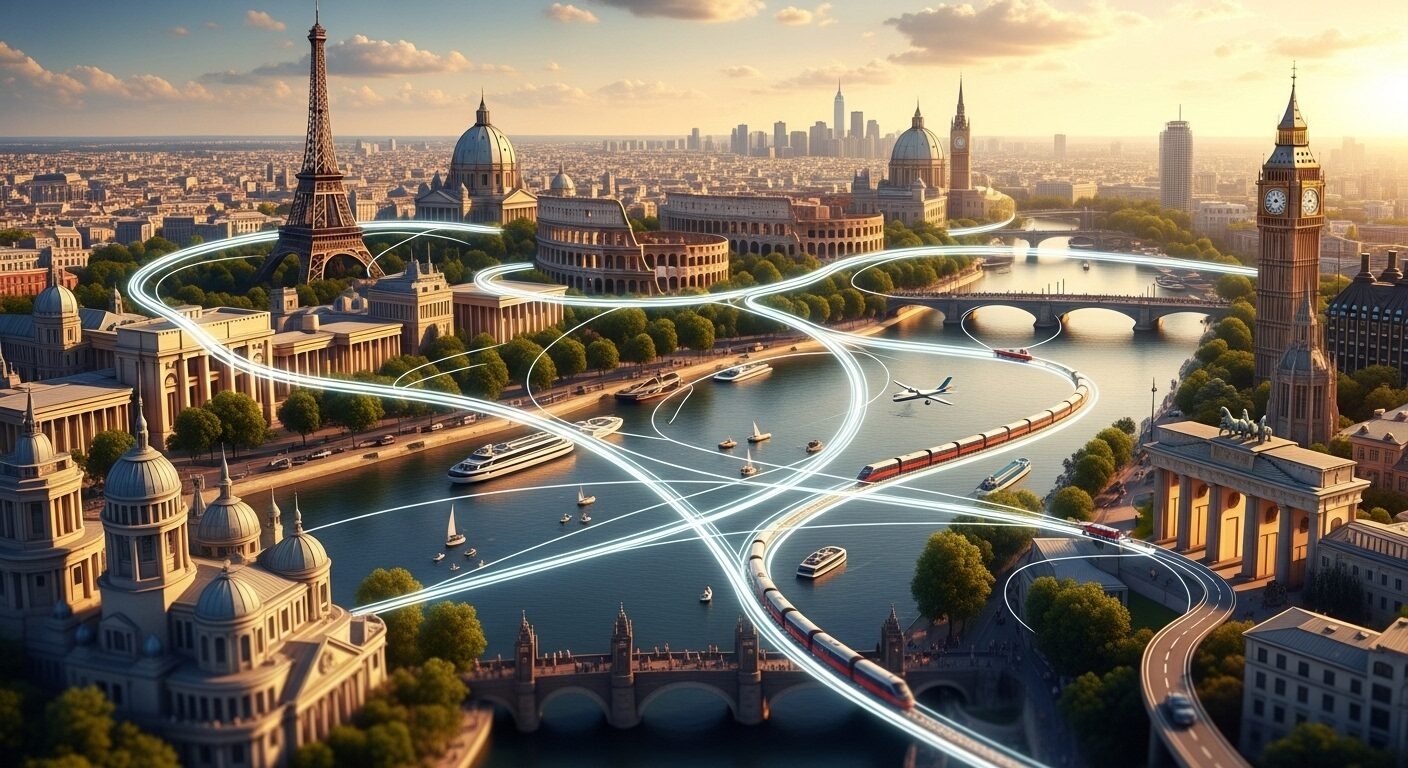
Travel routes between European cities: Your Ultimate Guide
Europe, a continent rich in history, culture, and diverse landscapes, offers an unparalleled travel experience. Its well-developed infrastructure makes exploring multiple destinations surprisingly straightforward. Consequently, understanding the various travel routes between European cities is crucial for any adventurer planning an unforgettable journey. This guide will illuminate your options, helping you navigate the continent efficiently and enjoyably.
Navigating Europe: Understanding Your Options
Choosing the right mode of transport significantly impacts your travel experience. Therefore, it’s essential to consider factors like budget, time, comfort, and the specific destinations you wish to visit.
Rail Travel: The Scenic and Efficient Choice
Train travel across Europe is often lauded for its efficiency and scenic beauty. High-speed rail networks connect major urban centers, offering rapid transit with minimal hassle. For example, the Eurostar links London with Paris and Brussels, while the TGV and ICE networks span France and Germany, respectively. Moreover, trains typically arrive directly in city centers, eliminating the need for lengthy airport transfers.
Many travelers opt for rail passes like Eurail or Interrail. These passes provide cost-effective access to extensive train networks, particularly beneficial for those planning multiple stops. Booking in advance, especially for popular high-speed routes, is generally recommended to secure the best fares.
Bus Travel: Budget-Friendly and Extensive
For budget-conscious travelers, buses present an excellent alternative. Companies such as FlixBus and Eurolines offer extensive networks covering virtually every corner of Europe. While journeys may take longer than by train or plane, the affordability is often a significant advantage. Furthermore, buses are ideal for reaching smaller towns or areas not directly served by rail.
Air Travel: For Distant Connections
When covering vast distances across Europe, flying remains the quickest option. Low-cost carriers like Ryanair, EasyJet, and Wizz Air provide numerous routes, making inter-country travel accessible. However, it’s important to factor in additional costs like airport transfers, baggage fees, and security wait times. Despite the speed, the overall journey can sometimes be comparable to high-speed rail for medium distances.
Car Rental: Flexibility and Exploration
Renting a car offers unparalleled flexibility, allowing you to explore at your own pace and discover hidden gems off the main tourist trails. This option is particularly appealing for rural areas or specific road trips. Nevertheless, consider potential challenges such as parking availability, toll roads, and varying driving regulations between countries. Fuel costs and potential international driving permit requirements are also important considerations.
Planning Your European City-to-City Journeys
Effective planning ensures a smooth and enjoyable trip. Consequently, a little preparation goes a long way in maximizing your European adventure.
Researching Routes and Schedules
Online tools are invaluable for planning travel routes between European cities. Websites like Rome2Rio, Trainline, and Google Maps provide comprehensive information on various transport options, estimated travel times, and costs. Always cross-reference with official operator websites for the most up-to-date schedules and pricing.
Booking in Advance vs. Spontaneity
For high-speed trains and popular flights, booking several weeks or even months in advance can lead to significant savings. Conversely, bus tickets often remain affordable closer to the departure date, offering more flexibility. Deciding on your booking strategy early can help manage your budget effectively.
Budgeting for Transport
Beyond the ticket price, remember to budget for other travel-related expenses. These may include luggage fees, airport transfers, seat reservations on certain trains, and potential city taxes. A comprehensive budget prevents unexpected costs during your journey.
Luggage Considerations
Different transport modes have varying luggage restrictions. Airlines are typically the strictest, with weight and size limits. Trains and buses generally offer more generous allowances, yet space can still be limited. Therefore, pack strategically to avoid inconveniences.
Popular Travel Routes Between European Cities
Europe boasts an incredible array of popular travel routes between European cities, each offering unique experiences. Here are some of the most frequented and iconic journeys:
Western Europe Classics
- Paris-London: The Eurostar high-speed train connects these two iconic capitals in just over two hours, passing under the English Channel. It’s a remarkably convenient and popular choice.
- Amsterdam-Brussels-Paris: This triangle can be easily traversed by high-speed rail (Thalys), allowing travelers to experience three distinct cultures in a relatively short period.
- Rome-Florence-Venice: Italy’s high-speed rail network (Frecciarossa/Italo) efficiently links these historical and artistic hubs, making a multi-city Italian tour highly accessible.
Central European Gems
- Berlin-Prague-Vienna: Explore the rich history and vibrant culture of these Central European capitals by train or bus. The journey between them is both scenic and manageable.
- Budapest-Bratislava-Vienna: Often called the
Conclusion
Navigating the diverse and captivating continent of Europe is an exciting endeavor, made simple by its excellent transportation infrastructure. Whether you choose the speed of a high-speed train, the budget-friendliness of a bus, the efficiency of a flight, or the flexibility of a rental car, understanding the various travel routes between European cities is key to a successful trip. By planning ahead, considering your options, and embracing the journey, you can unlock an unforgettable European adventure tailored to your preferences and budget. Happy travels!
Frequently Asked Questions (FAQ)
What’s the best way to travel between European cities for budget travelers?
For budget travelers, buses are often the most economical option, with companies like FlixBus offering extensive networks at low prices. Additionally, opting for slower regional trains or booking high-speed rail tickets well in advance can also provide significant savings compared to last-minute purchases or flights.
Is it better to book European train tickets in advance?
Yes, generally it is better to book European train tickets, especially for high-speed services and popular routes, several weeks or even months in advance. Early booking often secures cheaper fares, as prices tend to increase closer to the departure date. However, for regional or local trains, booking on the day is usually fine.
How long should I plan for travel between major European cities?
The travel time between major European cities varies greatly depending on the distance and mode of transport. For instance, Paris to London by Eurostar takes about 2.5 hours. However, always factor in additional time for getting to and from stations/airports, check-ins, and potential delays. For a smooth experience, allow at least half a day for travel when switching between major cities, and a full day for longer distances or more complex connections.
If you’re ready to grow your online presence, don’t hesitate contact UDM Creative today!
Want to get more information and then checkout theselinks.





binance
November 14, 2025Your point of view caught my eye and was very interesting. Thanks. I have a question for you.
Тркеу
November 14, 2025Thank you for your sharing. I am worried that I lack creative ideas. It is your article that makes me full of hope. Thank you. But, I have a question, can you help me?
binance Register
November 14, 2025Thank you for your sharing. I am worried that I lack creative ideas. It is your article that makes me full of hope. Thank you. But, I have a question, can you help me?